Blog
Office Furniture Procurement Checklist for Teams

A poorly planned furniture order rarely looks like a procurement problem on day one. It looks like a chair that cannot support an eight-hour workday, a workstation cluster with no room for monitors, or a reception desk that weakens a client’s first impression. This office furniture procurement checklist helps decision-makers specify the right furniture before budgets are committed, deliveries are scheduled, and teams move in.
The objective is not simply to fill an office with desks and chairs. It is to create a coordinated workplace that supports focus, authority, comfort, storage discipline, and productive collaboration. For a startup, that may mean flexible workstation capacity. For an established firm, it may mean executive finishes, boardroom presence, and a more polished visitor experience.
Start With the Workplace Plan, Not the Product List
Begin with the floor plan and headcount. Confirm how many people will occupy the office now, how many are expected within the next 12 to 24 months, and which roles require dedicated versus shared work settings. A procurement list built around current headcount alone can become restrictive quickly when a growing team needs additional workstations, filing capacity, or meeting seating.
Map the office by function: individual work areas, executive offices, reception, meeting rooms, training zones, storage points, break areas, and informal lounge spaces. Each zone has a different performance requirement. A finance team may need lockable storage close to desks, while a creative team may prioritize larger shared work surfaces and easy movement between seats.
Measure more than the room perimeter. Record door swings, columns, electrical points, windows, ceiling constraints, circulation routes, and elevator access. A boardroom table may fit the room on paper but still leave inadequate clearance for chairs and comfortable movement. In most offices, maintaining clear circulation is as important as maximizing seat count.
Confirm workstation capacity and dimensions
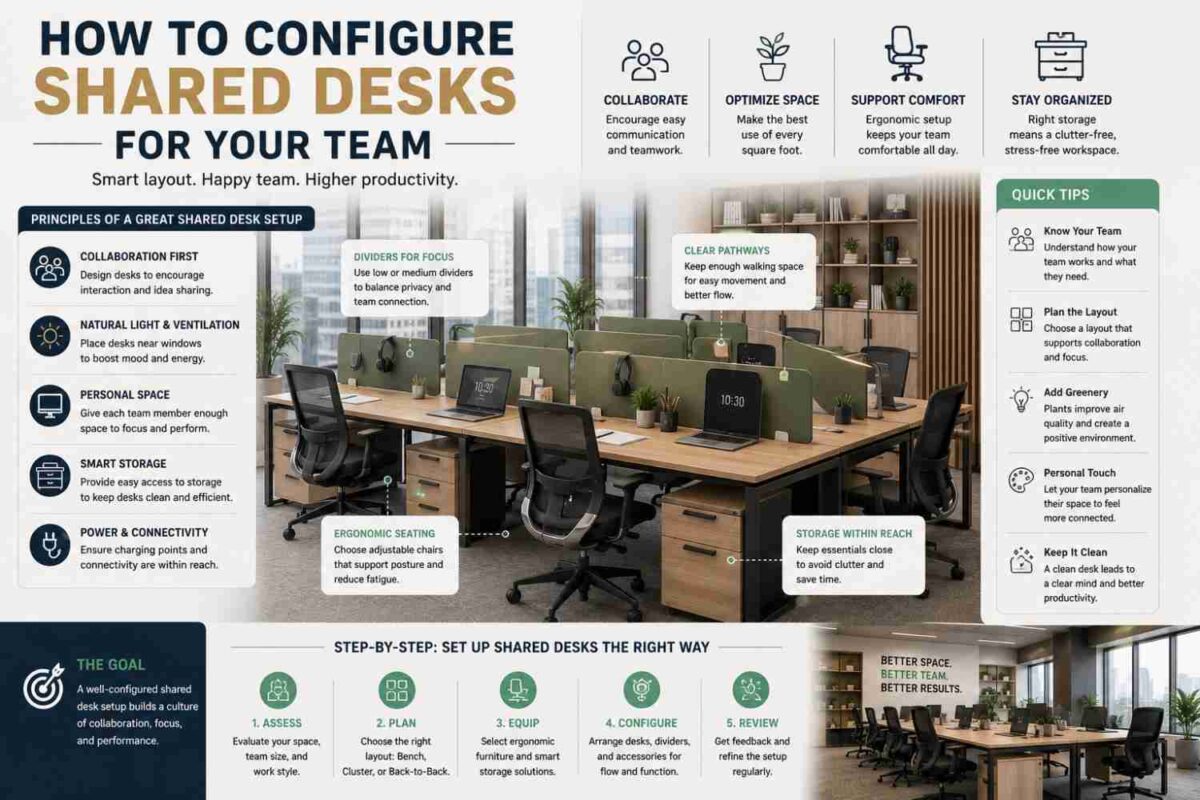
Specify the work surface based on the tools each employee uses. Laptop-based roles can often work effectively with compact desks, while accounting, design, trading, and management roles may need space for dual monitors, documents, docking stations, and visitor seating. Desk depth matters as much as width because it determines comfortable screen distance and usable writing space.
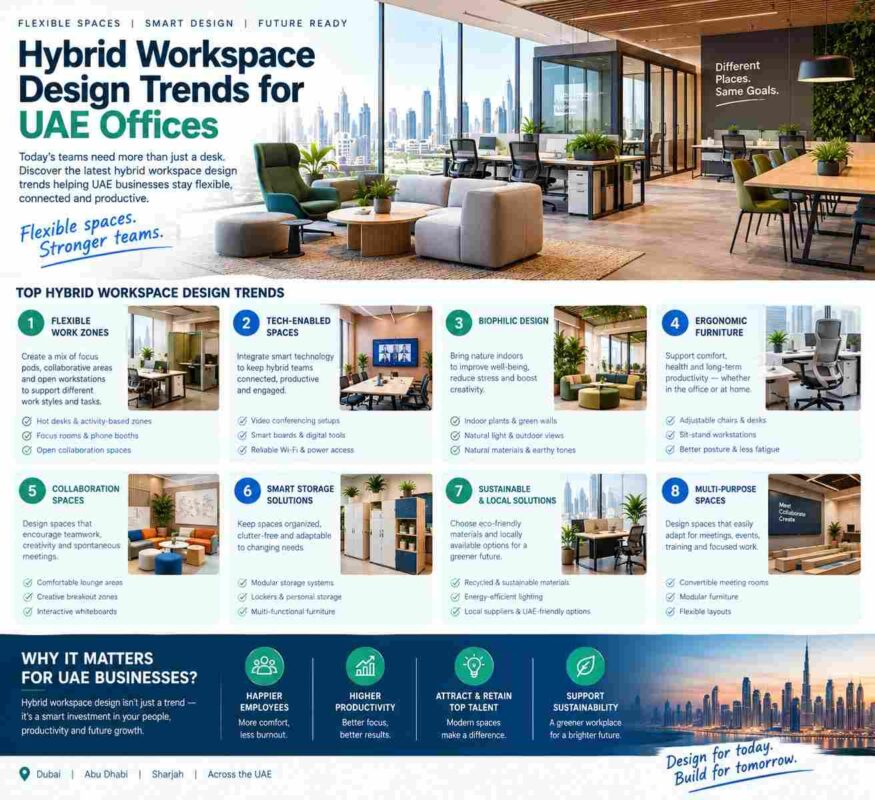
Clustered workstations for two, four, or six users can create an organized, efficient footprint for growing teams. Privacy panels are worth considering where concentration, visual separation, or cable management is a priority. However, taller panels can reduce sightlines and make a compact office feel closed in. The right height depends on whether the workplace favors quiet focus or open team interaction.
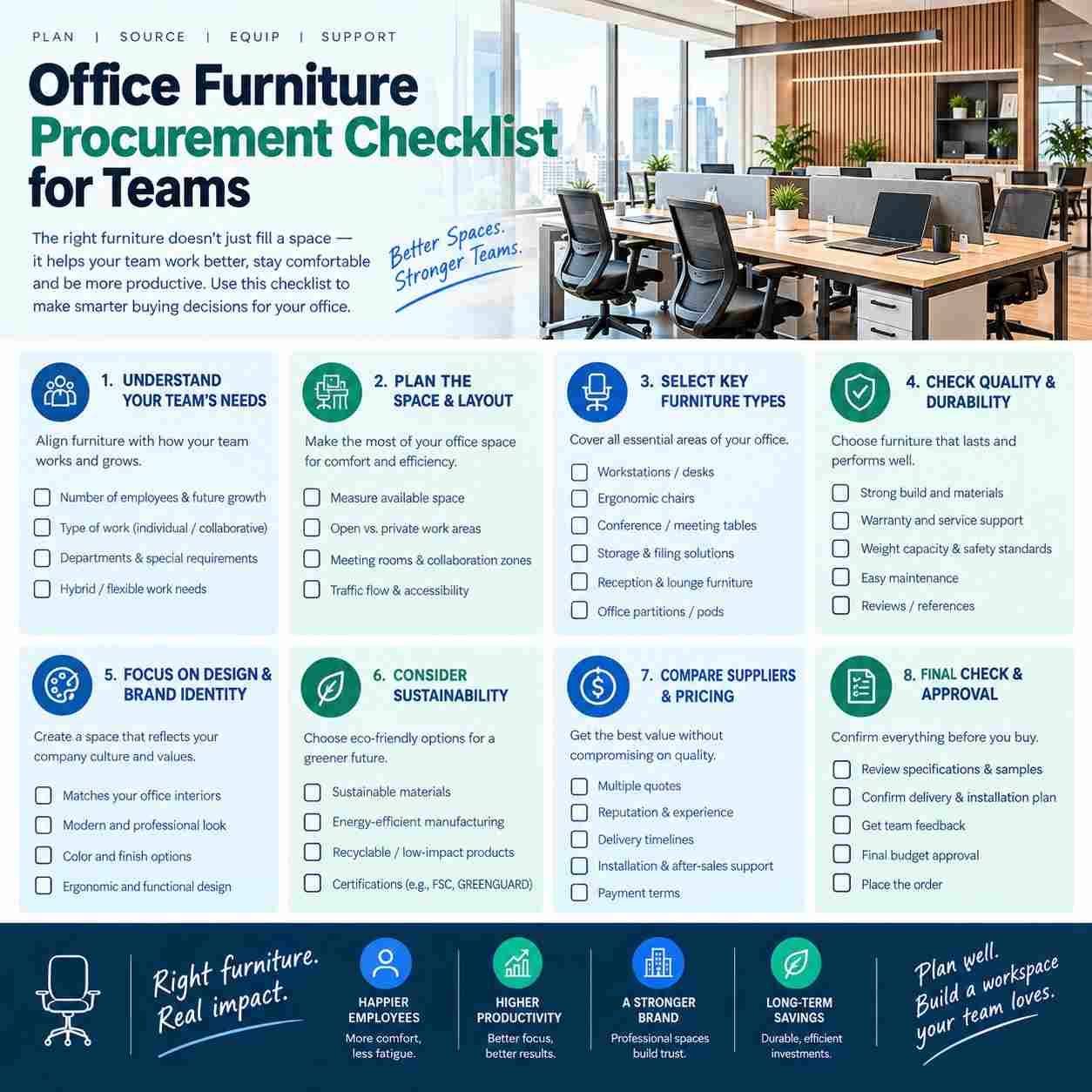
The Office Furniture Procurement Checklist
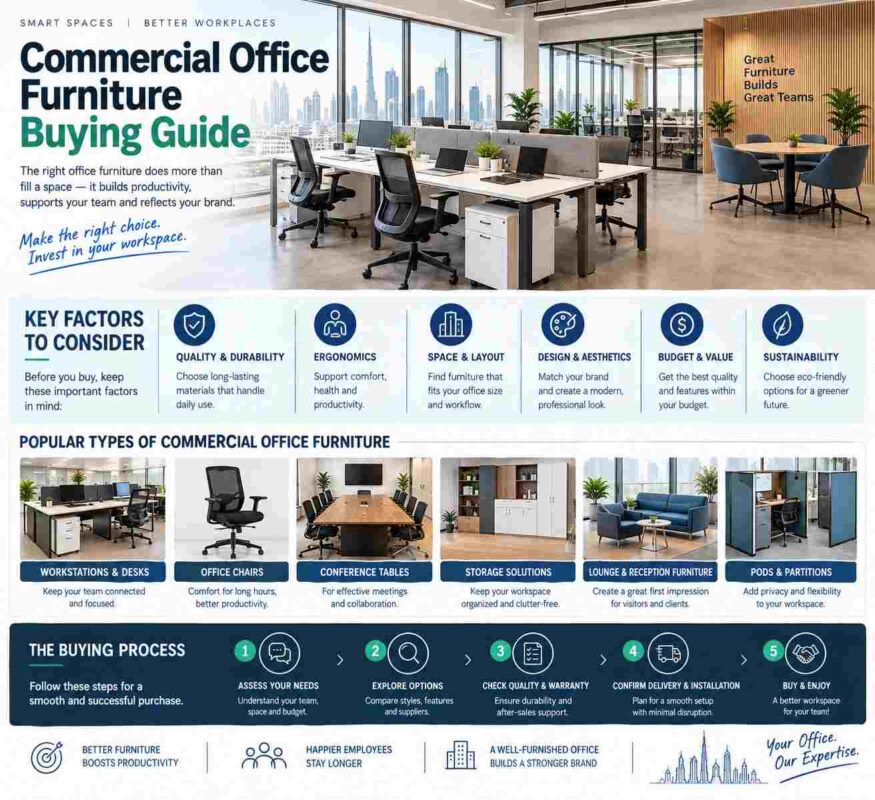
Before requesting quotations or approving finishes, ensure the procurement brief covers these core decisions:
- Space and capacity: workstation count, desk dimensions, room clearances, future growth allowance, and seating requirements for visitors or training sessions.
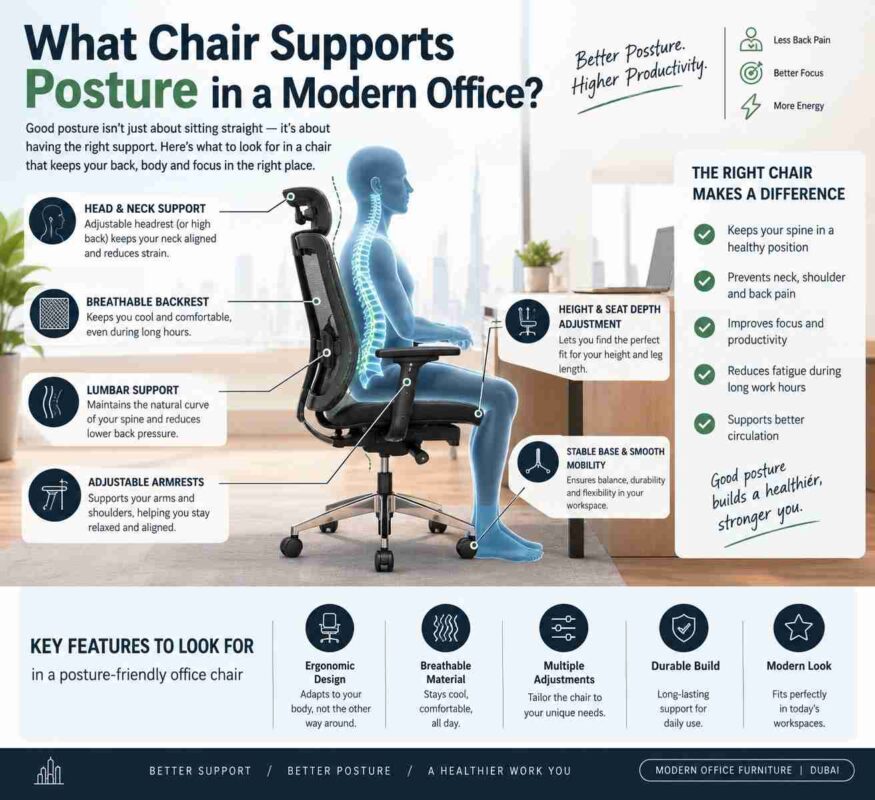
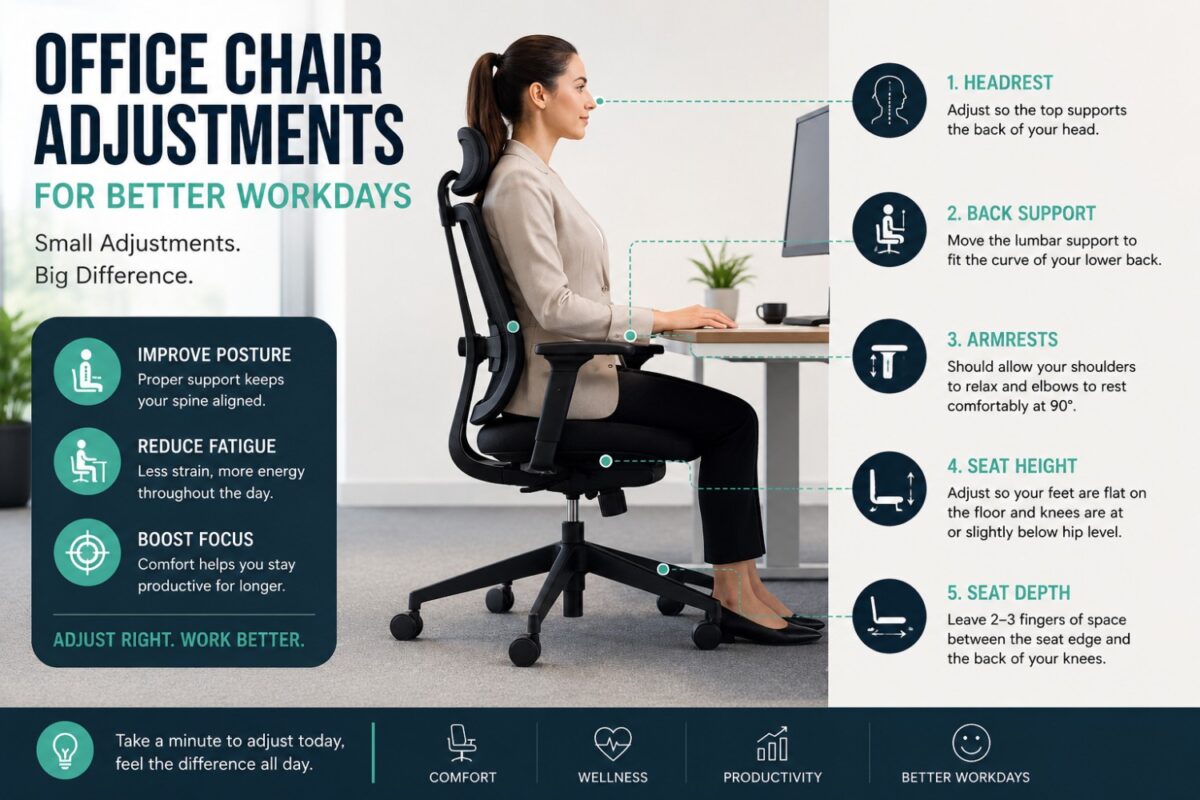
- Ergonomics and comfort: adjustable seating features, lumbar support, breathable backrests, seat depth, armrests, high-density foam, and suitable desk heights.
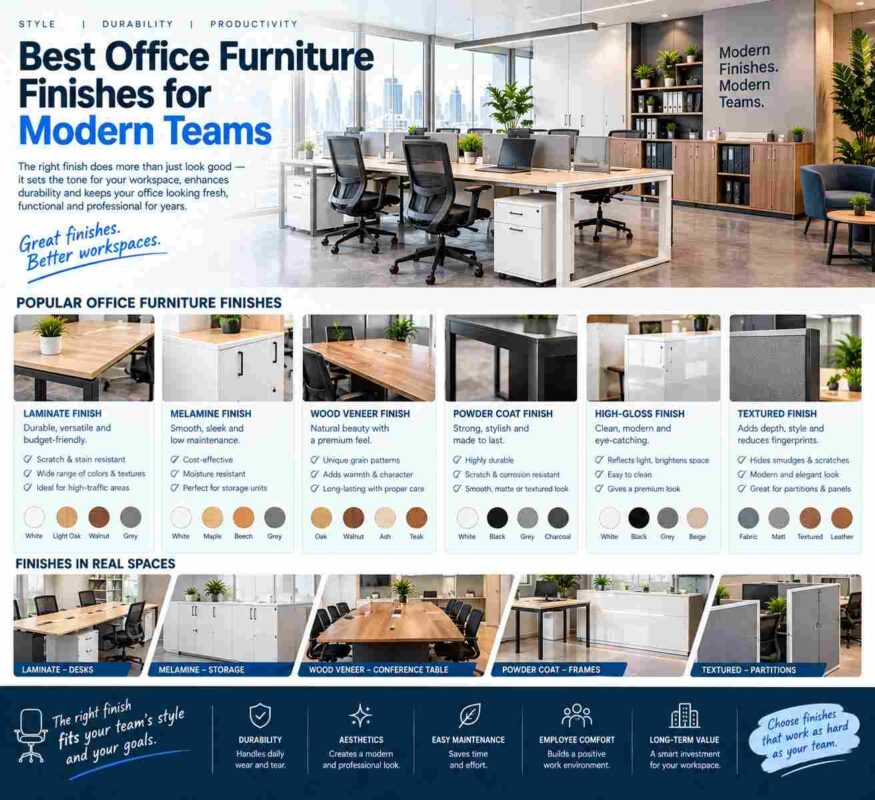
- Materials and finish: desktop durability, scratch resistance, metal frame quality, upholstery selection, color coordination, and executive-grade detailing.
- Operations and delivery: lead time, access restrictions, installation requirements, assembly, warranty coverage, replacement parts, and post-installation support.
This list should become a written procurement specification, not a collection of informal preferences. Clear specifications make it easier to compare suppliers, protect the budget, and avoid substitutions that compromise quality or appearance.
Specify Seating for the Work Actually Being Done
Office seating has the greatest daily impact on employee comfort. A visually impressive chair that lacks adjustment range may be suitable for a brief visitor meeting but not for a full workday. Procurement teams should separate task seating, executive seating, visitor chairs, training chairs, and lounge seating instead of applying one chair type across every zone.
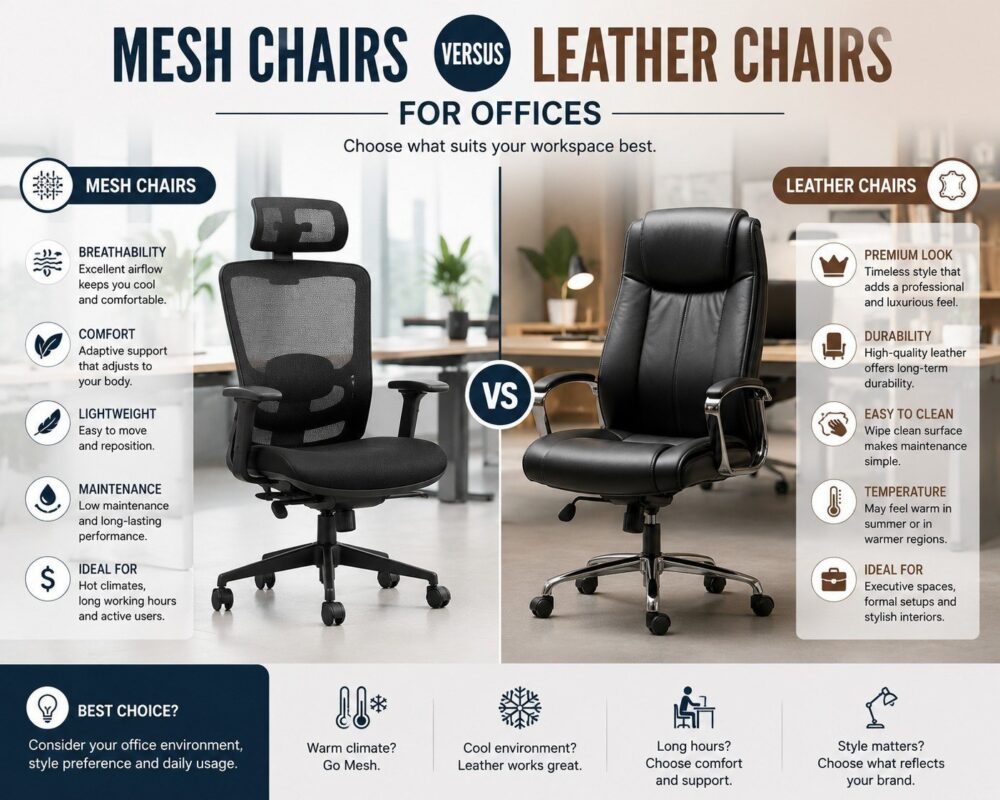
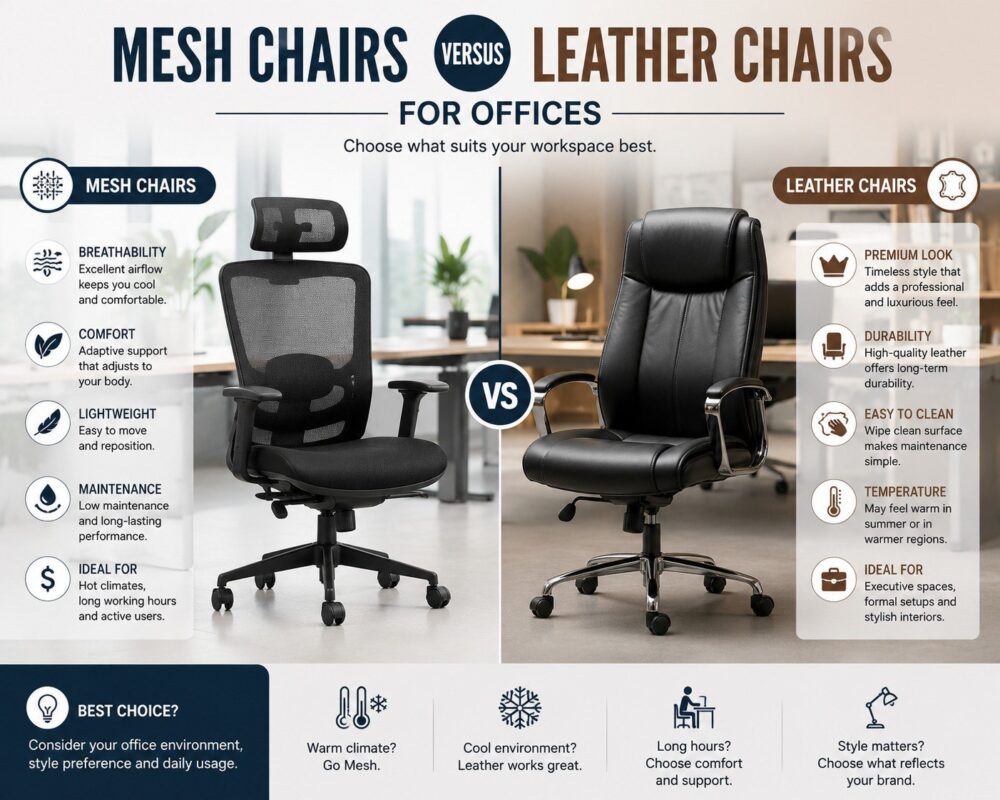
For daily task chairs, prioritize adjustable height, supportive lumbar design, stable five-star bases, smooth casters appropriate for the floor surface, and breathable mesh backrests where heat management matters. Adjustable armrests and tilt controls can improve comfort for employees who spend long periods at a screen. The more diverse the team, the more valuable adjustability becomes.
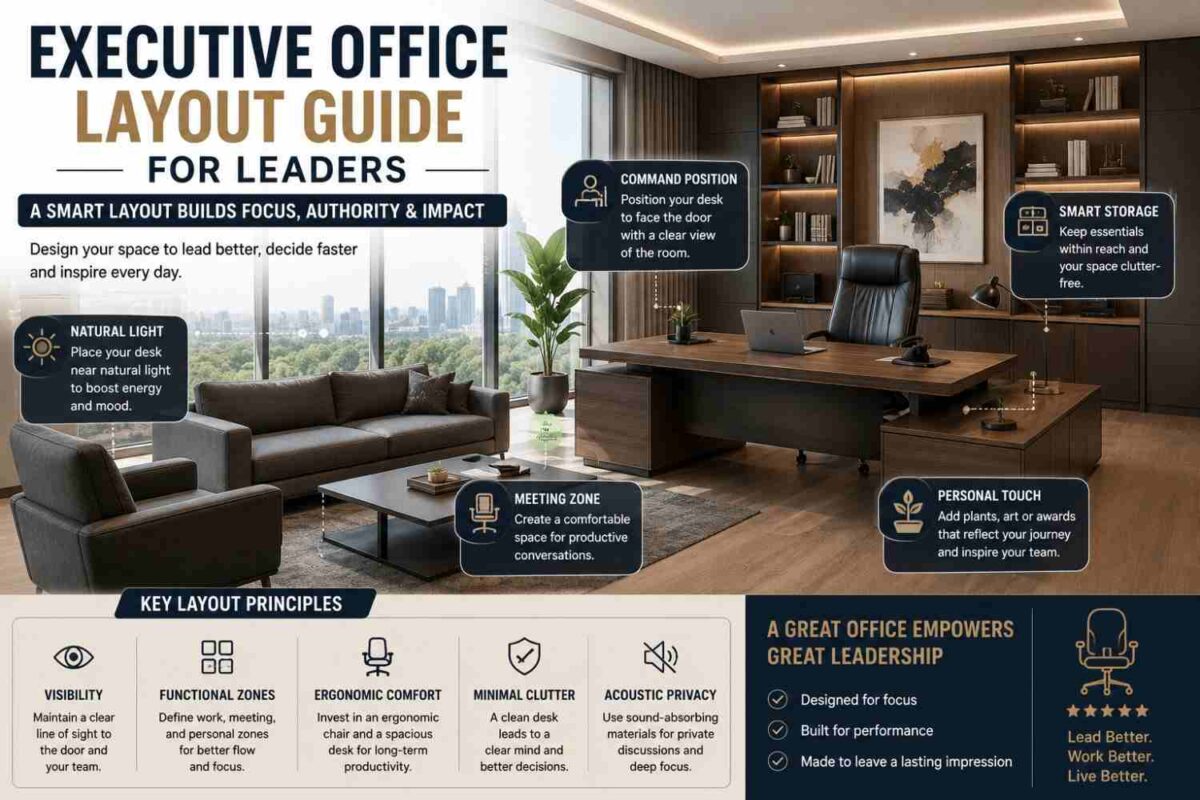
Executive offices call for a different balance. Leather or leather-look executive chairs communicate authority and confidence while providing substantial cushioning and a premium finish. Yet appearance should not override posture support. Select executive seating that offers a supportive back profile, reliable mechanisms, and dimensions suited to the user and desk.
Visitor and training chairs should be easy to position, durable under frequent use, and visually aligned with the rest of the office. Stackability may be valuable for multi-purpose training rooms, while fixed visitor chairs can create a stronger formal impression in executive offices or reception areas.
Test the chair and desk relationship
A chair is never purchased in isolation. Confirm that its armrest height allows it to slide under the selected desk, that the user can reach the work surface without raised shoulders, and that monitor placement remains comfortable. A high desk paired with a limited-height chair creates a posture problem even when both products meet acceptable standards individually.
Plan Storage Before Paper and Equipment Take Over
Storage is often underestimated because it does not carry the visual appeal of executive desks or reception counters. But insufficient storage quickly affects professional presentation. Documents migrate onto work surfaces, cables accumulate beneath desks, and shared supplies consume space intended for productive work.
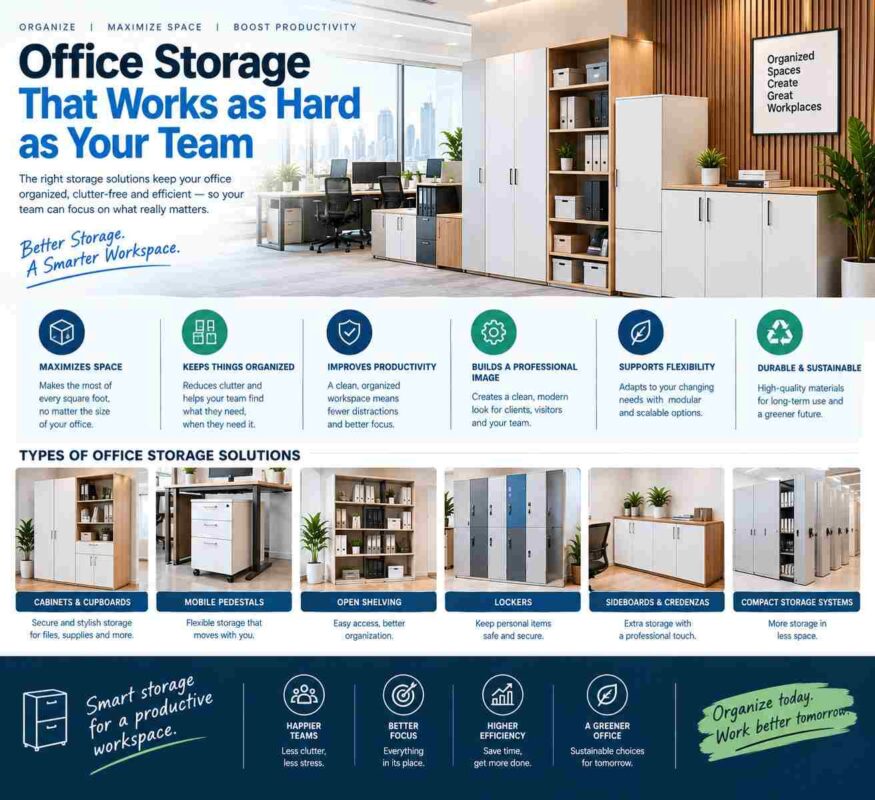
Determine what must be stored at each workstation, within a department, and centrally. Mobile pedestals work well for personal files and daily supplies because they keep essentials within reach and can move as teams reconfigure. Vertical filing cabinets offer a more space-efficient solution where document volume is high, while credenzas and cabinets can add a refined storage layer to executive offices and meeting rooms.
Security is a practical consideration. HR, finance, legal, and leadership teams may need lockable drawers or cabinets for sensitive records. Also consider drawer count, filing format, load capacity, and whether cabinets will interfere with desk legroom or circulation when opened.
Give Client-Facing Areas Their Own Standard
Reception, executive offices, and meeting rooms carry a larger share of the company’s visual identity. These are the spaces where clients, candidates, and partners form an immediate judgment about organization, leadership, and attention to detail.
A reception desk should be selected for both visibility and function. Confirm that it accommodates staff equipment, visitor sign-in needs, cable routing, and concealed storage while presenting a clean front elevation. The desk should feel proportionate to the reception area. An oversized counter can dominate a small lobby, while an undersized unit can appear temporary in a corporate setting.
In meeting rooms, choose a table based on real meeting behavior rather than maximum theoretical capacity. Allow sufficient elbow room, chair clearance, and access to presentation equipment. A large boardroom table creates authority, but only when the room can support it without making movement awkward. For smaller consultation rooms, a compact meeting table may be more practical and inviting.
Lounge sofas, coffee tables, and occasional chairs can extend the office beyond formal work settings. They are particularly useful for waiting areas, informal client conversations, and employee breaks. Select commercial-grade upholstery and surfaces that can withstand frequent use while retaining a polished appearance.
Compare Total Value, Not the Lowest Unit Price
A lower purchase price can become expensive when furniture wears prematurely, seating causes discomfort, or mismatched products require replacement after a short period. Compare construction quality, material specifications, finishing consistency, warranty terms, and expected service life alongside price.
Ask whether the supplier can coordinate desks, seating, storage, reception furniture, boardroom tables, and lounge pieces across one visual direction. A unified supplier relationship can reduce finish inconsistencies and simplify delivery coordination. It also gives procurement teams greater control over dimensions, materials, and the overall professional character of the workplace.
For projects in Dubai and across the UAE, delivery timing and site readiness deserve early attention. Confirm building access procedures, loading restrictions, installation windows, and whether the space is ready for furniture assembly. A delayed fit-out can affect move-in dates even when every product has arrived on schedule.
Approve Finishes With the Full Office in View
Finish selection should support the company’s identity while remaining practical for daily use. Dark executive finishes can convey established leadership and authority. Lighter wood tones, clean white surfaces, and metal details can create a contemporary, open feel. Neither direction is universally better. The decision depends on brand character, lighting, maintenance expectations, and the balance between formal and collaborative spaces.
Review samples together rather than approving each category separately. A workstation top, filing cabinet, executive desk, and reception counter may all look attractive independently but clash when placed in the same office. Coordinated colors, edge details, upholstery, and metal finishes create the sense of order that makes a workplace feel considered.
Office Furniture Procurement for Dubai and Abu Dhabi Projects
For procurement teams, facility managers and fit-out contractors sourcing office furniture in Dubai or Abu Dhabi, the brief should identify quantities, dimensions, finishes, delivery requirements and the furniture needed for each workplace zone. Grouping the requirement by office chairs, office desks, workstations, meeting furniture, storage and office sofas makes quotations easier to compare and reduces gaps between the BOQ and the final workplace.
Desk Craft supplies ready-made and customized office furniture for projects across Dubai, Abu Dhabi and the UAE, with in-house fabrication available for project-specific dimensions and finishes. When requesting a quotation, share the BOQ or furniture schedule, quantities, required sizes, preferred finishes and target delivery period so the requirement can be reviewed as one coordinated package.
Request an office furniture project quotation or send the project requirements for review.
Furniture procurement is one of the few operational decisions employees and visitors experience every day. Choose pieces that work hard, wear well, and present the business with the confidence its people bring to the room.