Blog
Hybrid Workspace Design Trends for UAE Offices

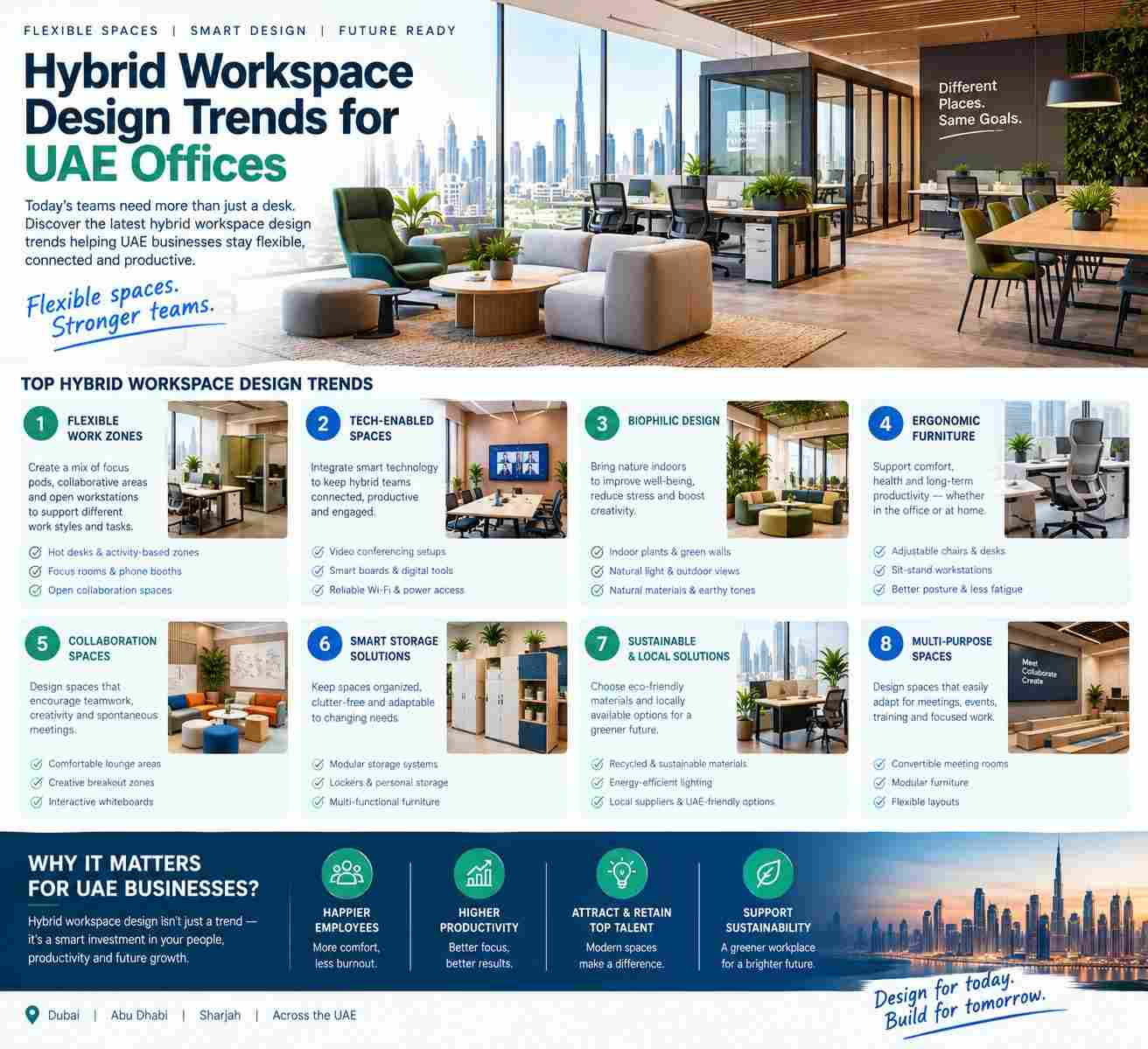
A half-empty office can still feel crowded when every employee arrives on the same two meeting-heavy days. That operational reality is shaping hybrid workspace design trends across Dubai and the UAE. The strongest offices are no longer planned around a fixed headcount at assigned desks. They are designed around the types of work people come to the office to do: concentrate, collaborate, meet clients, learn, and reconnect with their teams.
For business owners and facilities teams, the objective is not to make every square foot look flexible. It is to create a workplace that performs well at changing occupancy levels while maintaining the authority, comfort, and professional presentation clients expect.
Hybrid Workspace Design Trends That Matter Most
The shift toward hybrid work has made office furniture selection more strategic. A workstation is no longer just a place to position a monitor. A boardroom table is no longer only for formal meetings. Each area needs to earn its footprint by supporting a clear work mode, and the furniture must withstand frequent use without making the office feel temporary or improvised.
Purpose-built zones replace one-size-fits-all floor plans
The most successful hybrid offices use distinct zones rather than one large field of identical desks. Focus areas support individual, heads-down work. Collaborative neighborhoods give teams room to review projects and make quick decisions. Meeting rooms create privacy for video calls, client discussions, and confidential conversations. Lounge settings provide a more relaxed place for informal meetings or short breaks.
This approach gives employees a reason to choose the office beyond access to a desk. It also helps office managers avoid an expensive mistake: dedicating too much space to workstations that sit unused for much of the week.
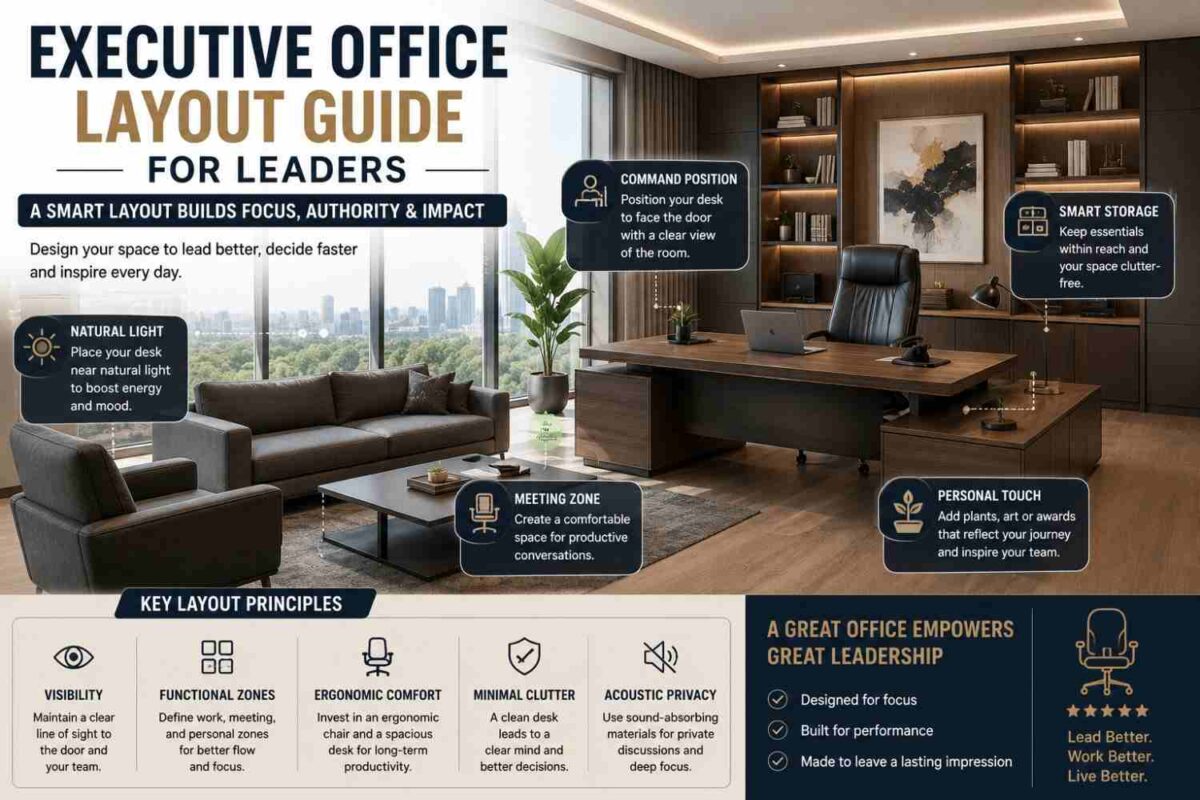
Furniture should make each zone visually clear. Clustered workstations with privacy panels establish focused team areas without building permanent walls. Executive desks and leather chairs reinforce leadership presence in private offices. Reception desks, sofas, and coffee tables give arrival areas a more composed, hospitality-led character. The result is an office that feels organized even when its daily occupancy changes.
Shared desks need stronger ergonomics, not less
Desk sharing has grown, but shared furniture cannot be generic furniture. When several people use the same desk across a week, adjustment and durability become more valuable. Employees vary in height, working posture, and preferences for monitor placement. A fixed, undersized work surface may save space initially, yet it often creates discomfort and poor desk habits over time.
Choose commercial-grade desks with sufficient depth for screens, keyboards, documents, and personal devices. Integrated cable management is equally useful, particularly when users frequently connect and disconnect laptops. A clear, uncluttered desktop supports faster transitions between users and preserves a more professional appearance.
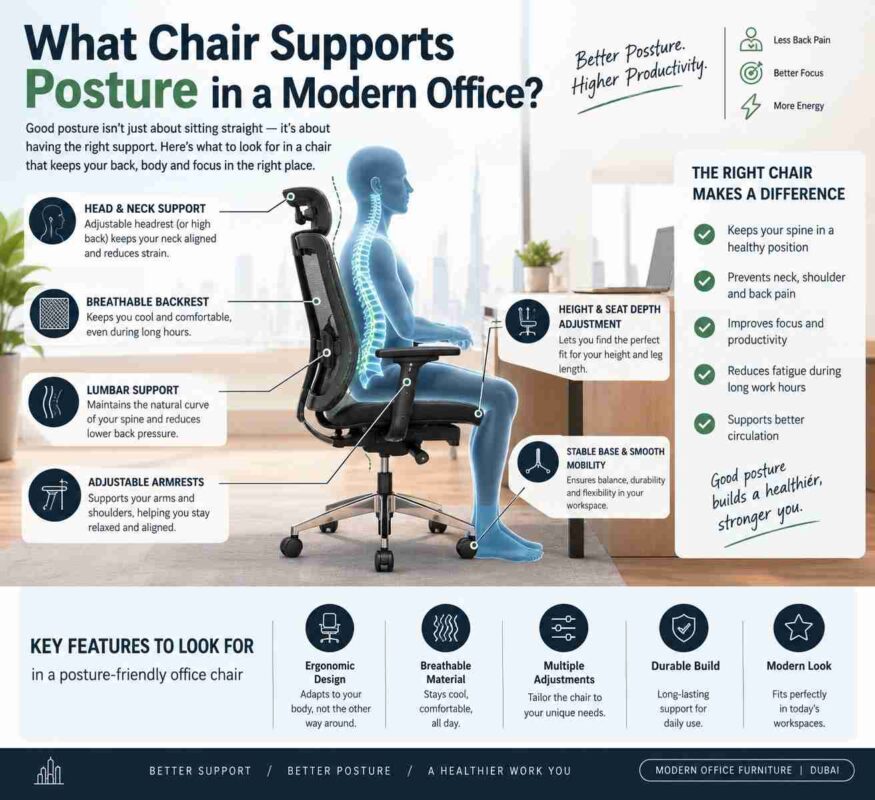
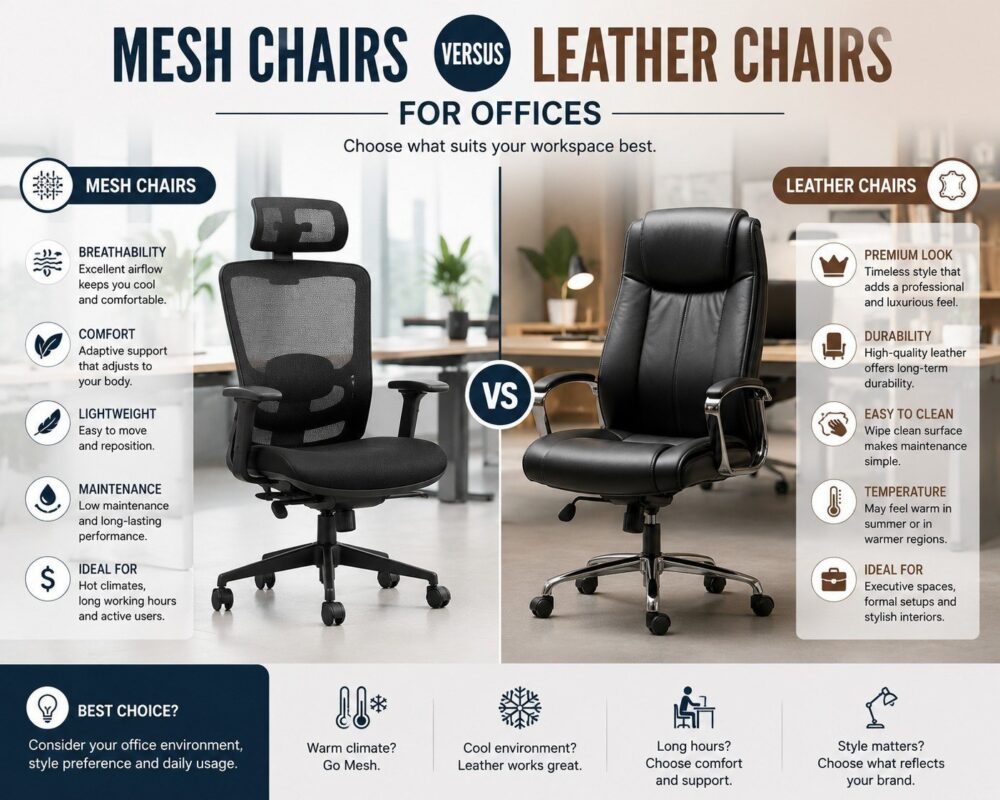
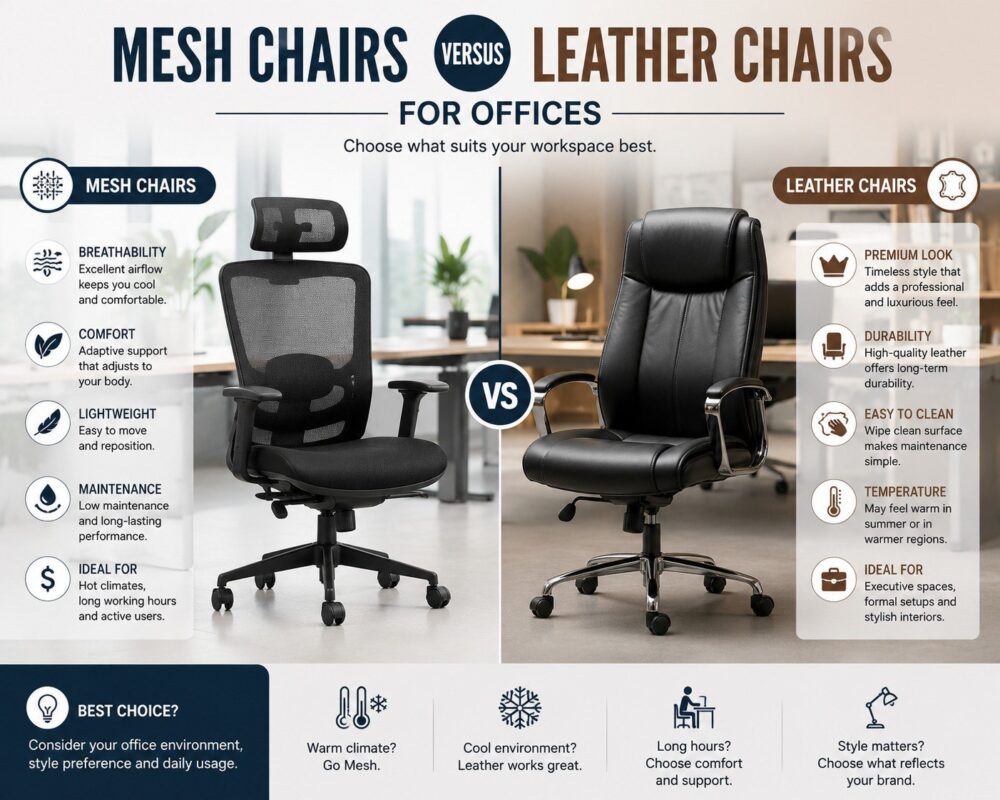
Seating deserves the same attention. Ergonomic mesh chairs with breathable backrests, adjustable seat height, lumbar support, and synchronized movement are practical for shared stations because they accommodate a broader range of users. High-density foam seat construction helps maintain comfort and shape through repeated use. Executive leather chairs remain appropriate for leadership offices and high-level meeting rooms, where authority and premium finishes are part of the environment’s message.
Neighborhood workstations support team attendance patterns
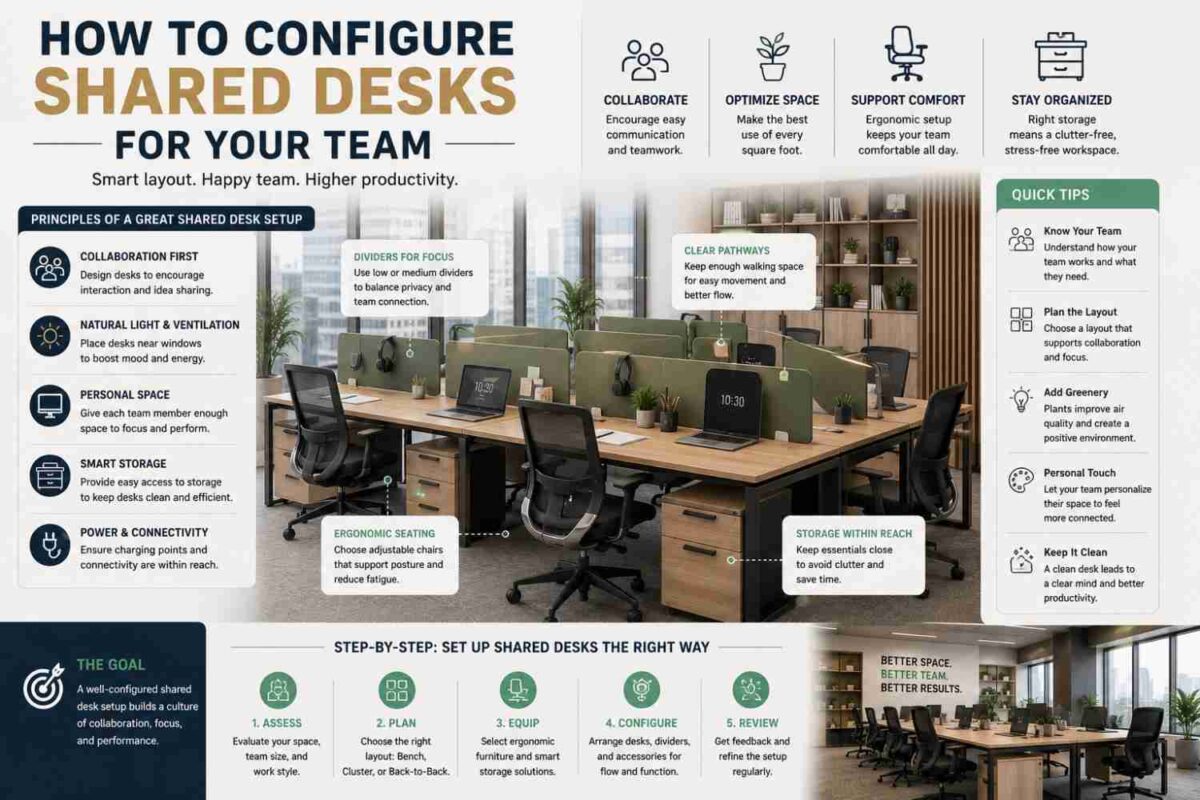
Hybrid teams rarely attend the office at random. Marketing may gather on campaign days, finance may need regular review sessions, and project teams may plan in-person workshops around key milestones. This has increased demand for workstation clusters for two, four, and six users.
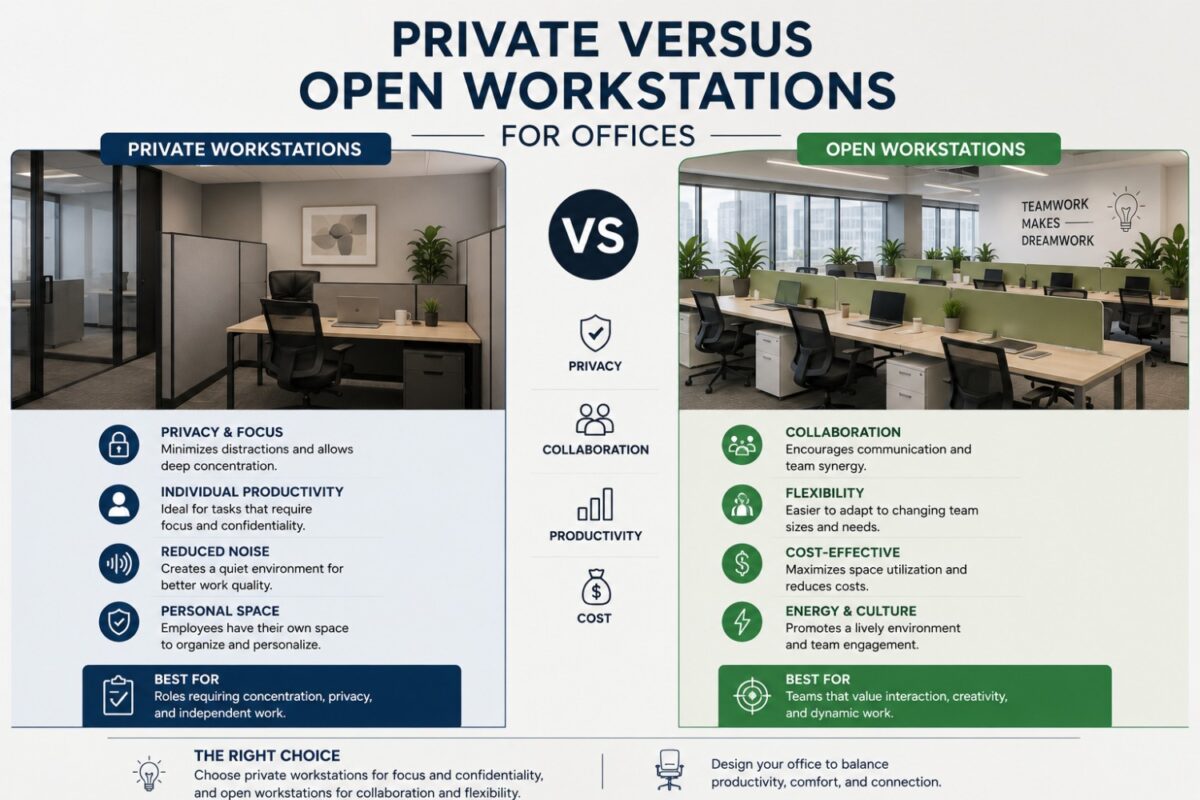
A shared workstation neighborhood gives a team a practical home base without requiring a permanently assigned desk for every employee. Privacy panels provide visual separation for focused tasks, while the close layout makes it easier to turn from individual work to a quick conversation. Add mobile storage pedestals so users have a secure place for documents and equipment without filling the office with fixed cabinets.
There is a trade-off. Dense benching can improve capacity, but it can also increase noise and visual distraction if used everywhere. Keep workstation clusters for teams that benefit from proximity, then balance them with quieter desks, enclosed rooms, or small focus zones for work requiring deeper concentration.
Collaboration Moves Beyond the Boardroom
The traditional boardroom still has a place in a hybrid office. It is essential for leadership meetings, presentations, client conversations, and discussions involving sensitive information. Yet not every collaboration needs a formal room with a large conference table.
Smaller meeting settings are becoming a more productive use of floor space. A compact table with comfortable visitor chairs can support two-to-four-person check-ins. Training chairs offer flexibility for learning sessions and can be arranged for workshops when a larger boardroom is not needed. Informal lounges with sofas, lounge chairs, and coffee tables make one-to-one conversations feel less formal while preserving a polished business atmosphere.
The key is to match the furniture to the expected behavior. A lounge is ideal for an informal discussion, but it is not a replacement for an ergonomic workstation during a full afternoon of laptop work. Likewise, a large boardroom should not be the default location for every brief team conversation. Giving people several suitable settings reduces the pressure on any single room.
Video-ready meeting spaces are now standard
Hybrid collaboration often includes participants joining remotely. That changes how meeting rooms should be furnished and arranged. People need direct sightlines to a screen, camera, or presentation surface, and tables need enough space for laptops without forcing attendees into uncomfortable positions.
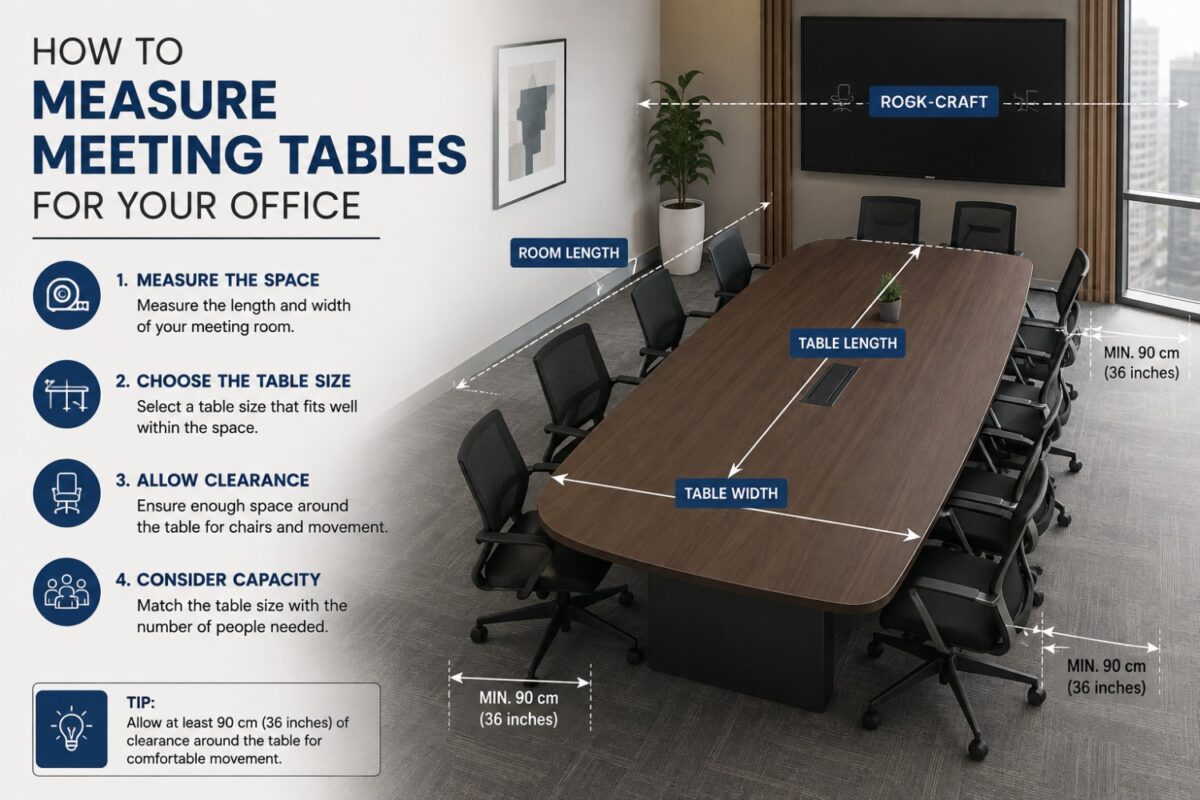
Boardroom tables with appropriate seating capacity create order in larger meetings. Avoid selecting a table solely because it fills the room. Leave circulation space around it, account for chair movement, and consider where power access will be needed. A well-proportioned room looks more premium and allows participants to engage without feeling compressed.
For smaller rooms, choose tables that support the expected number of users rather than oversized executive furniture. The most effective hybrid office is not defined by the largest table. It is defined by how reliably each space supports its intended meeting type.
Storage Is Becoming More Mobile and More Intentional
Hybrid work does not eliminate physical storage. Contracts, samples, stationery, IT accessories, and personal items still require a secure place. What has changed is the expectation that storage should support a flexible layout rather than lock the entire office into a rigid arrangement.
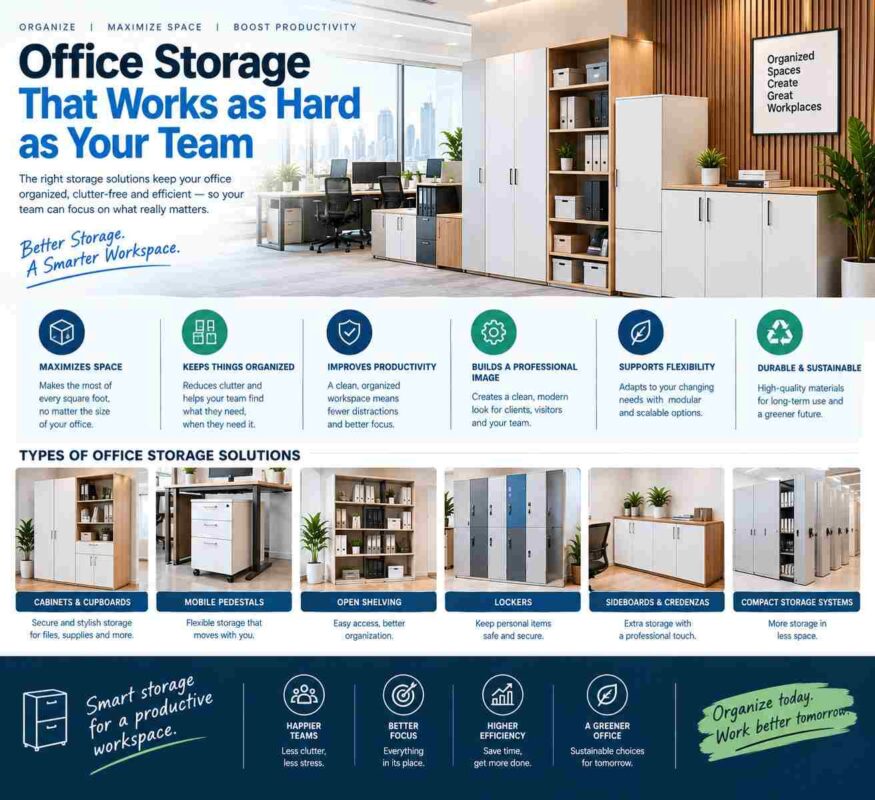
Mobile filing cabinets and storage pedestals work well beside shared desks and team clusters. They give users convenient access to essentials and can move as the layout changes. Vertical filing cabinets are better suited to areas where floor space is limited and document retention remains a priority. Closed storage keeps visual clutter out of sight, which matters in client-facing offices and executive environments.
A useful planning rule is to separate daily-use storage from archive storage. Keep frequently used materials close to teams. Move less-accessed files to a designated storage zone. This protects desk space, improves organization, and prevents workstations from becoming long-term dumping grounds.
Design Must Signal Culture as Well as Function
A hybrid office is a physical expression of why a company values in-person time. If the office feels less comfortable than home, employees will treat attendance as an obligation. If it provides better tools, stronger settings for collaboration, and a more professional client experience, it becomes a productive destination.
Premium finishes, coordinated desk systems, quality seating, and considered lounge furniture communicate that the organization is established and prepared for growth. For professional service firms, executive offices and reception areas carry particular weight. Clients form an impression before a meeting begins, and a well-furnished environment can reinforce confidence in the business behind it.
Consistency matters more than excessive decoration. Select a coordinated palette of materials, finishes, and furniture profiles across workstations, storage, meeting rooms, and reception. Desk Craft helps organizations bring these categories together, from ergonomic task seating and workstation clusters to executive desks, boardroom tables, and lounge pieces. A unified selection creates a stronger impression than a collection of unrelated purchases.
Plan for Change Without Making the Office Temporary
Flexibility is valuable, but an office should not look like it was assembled for a short-term project. The best approach combines stable anchor pieces with adaptable components. Reception desks, executive desks, boardroom tables, and major storage cabinets can establish permanence. Mobile pedestals, training chairs, modular workstation arrangements, and movable lounge pieces allow teams to adjust as needs evolve.
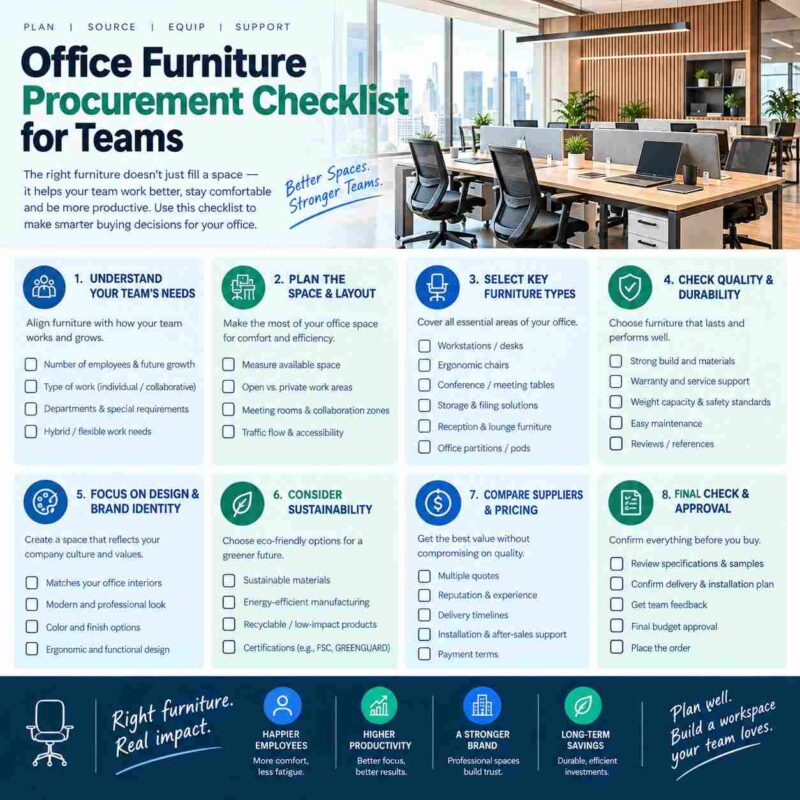
Before purchasing, review attendance data, department work styles, client-facing requirements, and anticipated growth over the next 12 to 24 months. A startup may prioritize adaptable four-person workstations and training seating. An established firm may require stronger executive zones, formal boardroom capacity, and refined reception furniture. The right balance depends on how people actually work, not on a generic hybrid-office layout.
A well-designed hybrid workspace gives every visit a purpose. Start with the moments that matter most – focused project work, team planning, client meetings, and leadership decisions – then furnish each one with the comfort, capacity, and visual authority it deserves.