

Blog
High Back Versus Mid Back Chairs: Which Fits?

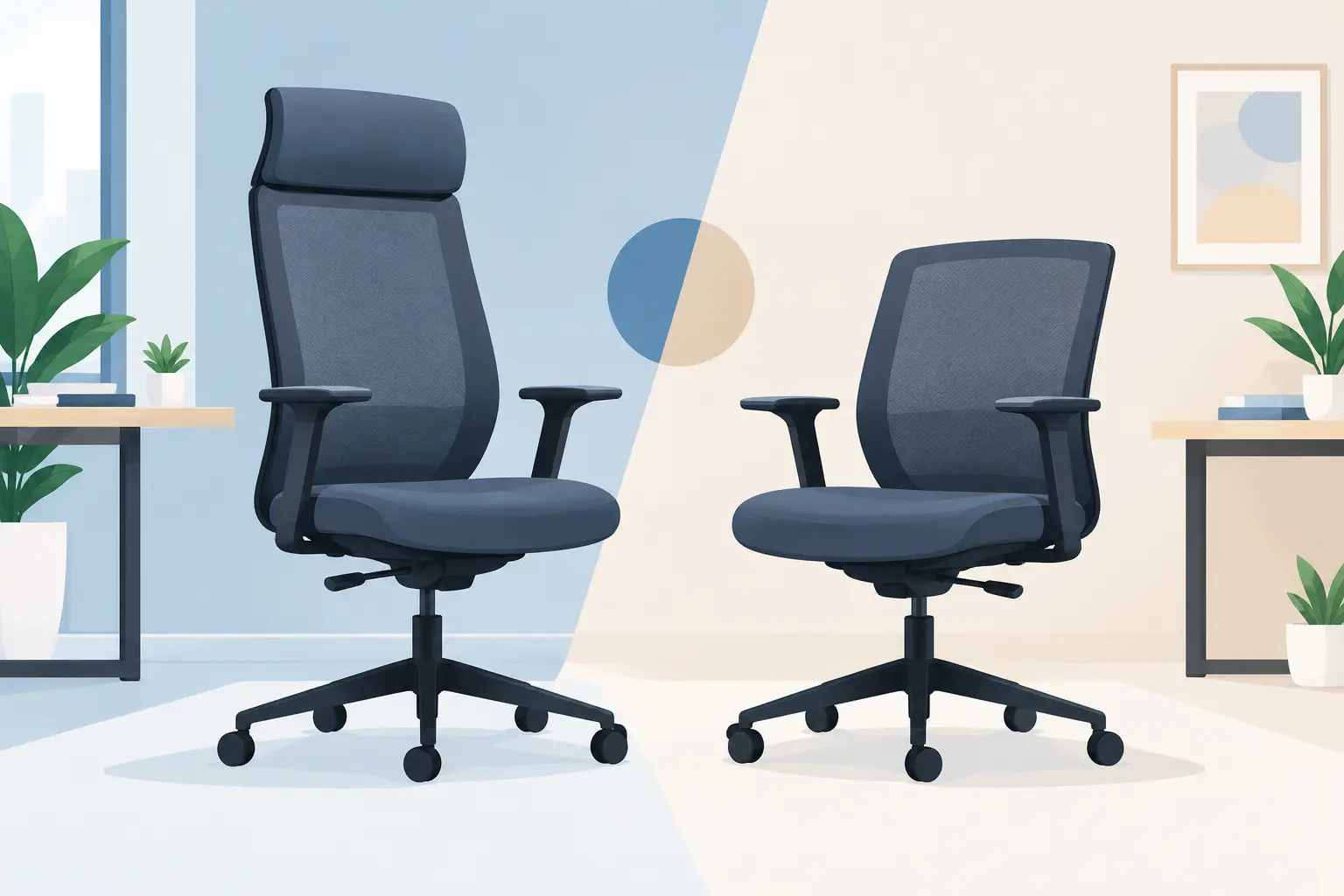
A chair back is more than a visual detail. It shapes how an executive office presents authority, how long a team member can remain focused at a workstation, and how comfortable a meeting feels after the first 20 minutes. When comparing high back versus mid back chairs, the right choice depends on the role, the work pattern, the workstation layout, and the image your office needs to project.
A high back chair can bring a stronger executive presence and more upper-body coverage. A mid back chair often creates a lighter, more open look while delivering capable support for everyday desk work. Neither is automatically better. The most effective office seating plan uses each style where it performs best.
High Back Versus Mid Back Chairs at a Glance
The difference is defined by where the backrest ends. A mid back chair typically supports the lower and middle back, ending around the shoulder-blade area. A high back chair extends higher, supporting more of the upper back and, in many designs, the shoulders, neck, or head.
That extra height changes both comfort and appearance. High back models are commonly selected for executive desks, private offices, and roles involving long periods of concentrated computer work. Their taller silhouette communicates leadership and creates a more substantial furniture presence behind a desk.
Mid back chairs are a practical fit for operational teams, shared workstations, conference rooms, and offices where visual openness matters. They are easier to place in compact layouts and can keep a row of workstations from feeling visually heavy. With the right lumbar contour, breathable mesh backrest, and adjustment range, a mid back chair can still provide excellent daily ergonomic performance.
When a High Back Chair Is the Better Investment
A high back chair is designed for people who spend extended periods seated and benefit from broader support across the spine and shoulders. For an executive, department head, consultant, or manager working from a dedicated desk, this added coverage can make a noticeable difference late in the day.
Executive presence and private-office design
In a private office, the chair is part of the room’s visual hierarchy. A high back leather chair paired with an executive desk creates a clear sense of authority and comfort. It works particularly well in client-facing environments such as law firms, financial offices, real estate companies, and corporate headquarters, where furnishings contribute to a strong first impression.
Premium upholstery, polished bases, padded armrests, and executive finishes give high back chairs a more formal character. They are not only seats for work. They help establish the level of the space.
Extended support for focused work
Employees do not need a headrest simply because a chair is tall, but many high back models offer a more enveloping backrest that supports posture during longer work sessions. This is useful for leaders reviewing reports, creative professionals working through detailed tasks, or staff members who move between calls, screen work, and document review throughout the day.
Look beyond back height alone. A high back chair should have adjustable lumbar support or a well-defined lumbar curve, seat-height adjustment, armrests that align with the desk height, and a tilt mechanism that allows the user to change posture. High-density foam in a padded model or tension-adjustable mesh in a breathable model will further affect day-to-day comfort.
Where high backs need careful planning
The trade-off is scale. High back chairs can look oversized at compact desks, in narrow offices, or around small meeting tables. They may also block sightlines in open-plan environments, especially when arranged in large workstation clusters.
They are usually best assigned selectively rather than used as the default chair for every employee. Giving every role a high back executive chair can add cost, reduce visual consistency in collaborative areas, and create more chair bulk than the floor plan needs.
Why Mid Back Chairs Work So Well in Team Areas
A mid back chair has a more understated profile, but that does not make it a lower-performance option. In a well-planned office, it is often the most versatile seating category. It provides essential back support without dominating the workstation or meeting room.
A cleaner look for open workstations
For two-, four-, or six-person workstation clusters, mid back chairs maintain a sense of space. Their lower profile allows privacy panels, desk dividers, and storage pedestals to do their job without making the work area feel enclosed. This helps offices retain a clean, organized appearance while still giving employees personal comfort.
Mesh mid back chairs are especially suitable where air circulation and easy movement are priorities. Their breathable construction can be a practical choice for busy teams, while a supportive frame and contoured lumbar zone help maintain a more upright seated position.
Strong value for daily task seating
For standard desk work, a quality mid back chair can meet the needs of most employees. The key is to choose commercial-grade construction rather than relying on a basic task chair with limited adjustments.
A capable mid back chair should allow users to set the seat height so their feet rest flat, keep knees close to a 90-degree angle, and position armrests so shoulders remain relaxed while typing. A synchronized tilt or recline function is valuable because it encourages movement instead of locking the body into one posture for hours.
Mid back chairs also work well for hot-desking. Since they are familiar, adaptable, and less imposing, they suit shared desks used by different people across the week. Adjustable features become even more valuable in this setting because one chair must accommodate more than one body type.
Better proportion for meeting rooms
A boardroom chair should support focused discussion without turning the table into a row of oversized silhouettes. Mid back conference chairs are often the better choice for rooms where people meet for one or two hours, review presentations, and need to move in and out easily.
For formal boardrooms, a padded mid back chair in leather or premium upholstery can still deliver a polished, executive finish. For training rooms and flexible meeting spaces, a lighter mid back design may be easier to reconfigure and store.
Choose by Role, Not by Job Title Alone
Job title is a useful starting point, but work behavior matters more. A company founder who spends most of the day in meetings may prefer a refined mid back chair at a boardroom table and a high back chair at their desk. A project manager coordinating a busy team may benefit from a highly adjustable mid back mesh chair that supports active movement throughout the day.
Consider the following workplace patterns before specifying seating:
- Long, independent desk work often favors high back chairs with generous lumbar support and a recline function.
- Collaborative team work usually benefits from adaptable mid back chairs that keep the workspace visually open.
- Client-facing executive offices suit high back leather or upholstered chairs that reinforce authority and premium craftsmanship.
- Meeting rooms generally call for mid back seating, unless the room is a formal executive boardroom with longer sessions.
- Compact offices and workstation clusters benefit from the smaller visual footprint of mid back designs.
This approach creates a more intentional furniture plan than selecting one chair type for the entire company.
The Ergonomic Features That Matter More Than Height
Back height influences support, but it cannot compensate for poor fit. Whether you select a high back or mid back chair, the seat should match the user and desk configuration.
Start with lumbar support. The chair’s lower-back contour should meet the natural curve of the spine rather than press too high or too low. Then assess seat depth. Users should be able to sit back against the backrest while leaving a small gap between the front of the seat and the back of the knees.
Armrests should support the forearms without forcing shoulders upward. Adjustable arm height is especially useful in offices with varying desk heights or employees who alternate between keyboard work and phone calls. A stable five-star base, smooth casters suited to the flooring, and a durable weight-rated mechanism are equally important in commercial settings.
For mesh chairs, review the tension, frame quality, and lumbar structure rather than assuming every mesh back performs the same. For upholstered chairs, consider the density and resilience of the foam. A chair that feels soft in a showroom can lose support quickly if the cushioning is not designed for daily commercial use.
Build a Seating Mix That Looks Planned
The most polished offices do not repeat a single chair throughout every zone. They create consistency through coordinated finishes, colors, and materials while adjusting chair type to the purpose of each space.
A practical plan might use high back executive seating in leadership offices, ergonomic mid back mesh chairs at team workstations, and upholstered mid back chairs around a meeting table. The palette can remain coordinated through black frames, chrome bases, neutral upholstery, or complementary wood and leather tones. The result feels organized rather than mismatched.
Desk Craft approaches office furnishing as a connected system: seating should work with desk dimensions, privacy panels, storage, meeting tables, and the professional identity of the business. A high back chair can set the tone in a private office, while mid back chairs keep the wider workplace efficient, comfortable, and visually composed.
Before finalizing your order, let people test the seat height, arm position, and back support against the actual desk they will use. The best chair is the one that supports productive work, fits the room with confidence, and still feels right at the end of a demanding day.
Request a Quote for your office furniture requirement.


