

Blog
10 Top Workplace Storage Ideas for Modern Offices

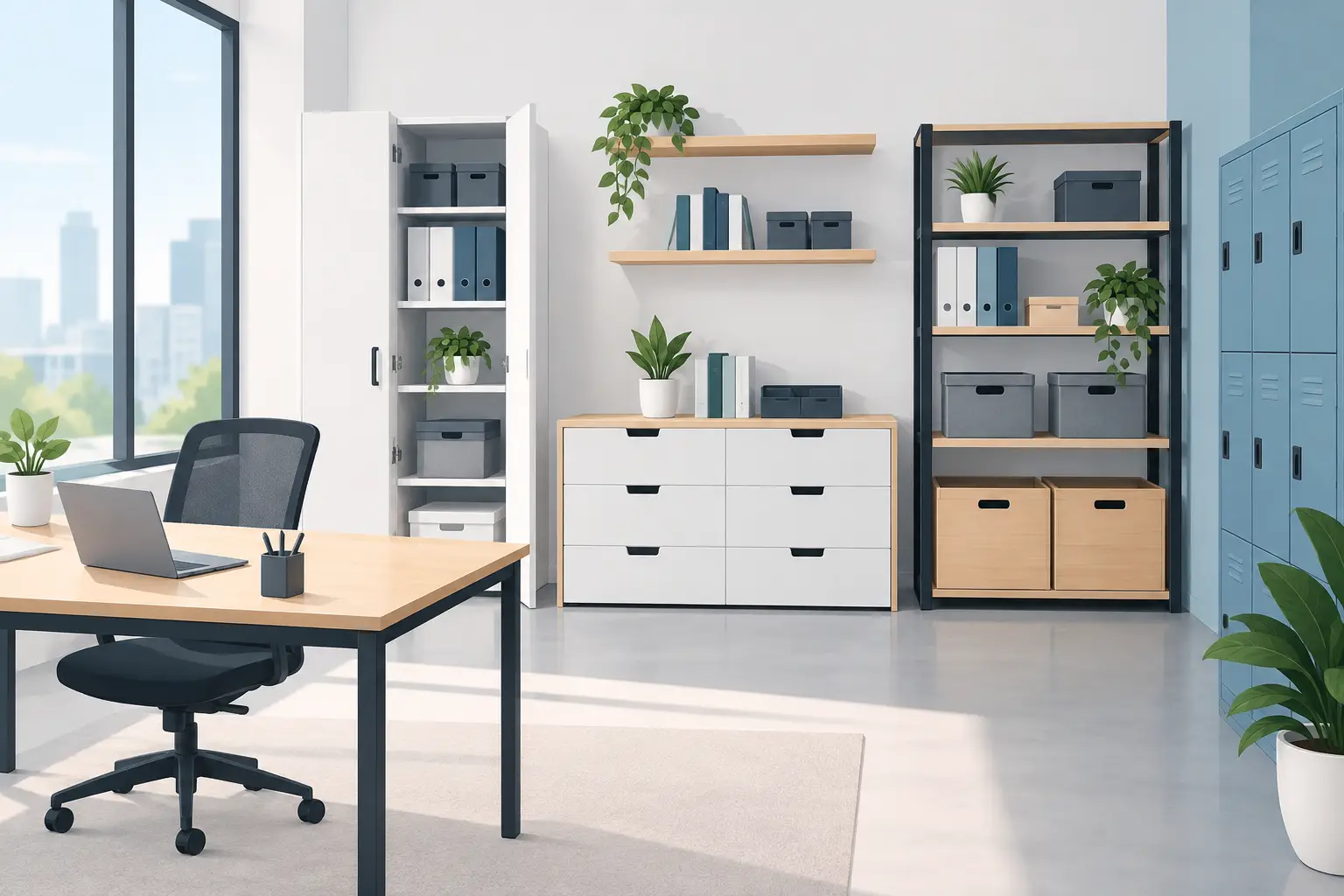
A workstation can look premium on opening day and feel overcrowded within a month. Paperwork accumulates, personal items migrate across desktops, supplies take over meeting rooms, and confidential files end up wherever there is an empty drawer. The best top workplace storage ideas solve this operational problem without compromising the clean, professional appearance clients and employees expect.
For office managers, designers, and procurement teams, storage is not a final accessory purchase. It shapes how teams move, focus, protect information, and maintain a workplace that reflects authority and control. The right mix depends on your team structure, document volume, available floor area, and the level of privacy each role requires.
1. Give Every Workstation a Mobile Pedestal
A mobile pedestal is one of the most efficient ways to bring personal storage directly to the user. Positioned beneath or beside a desk, it keeps daily essentials, files, chargers, and stationery within reach while leaving the work surface clear for focused work. Browse the wider office storage range when coordinating pedestals, filing cabinets and shared storage for a workplace.
For open-plan workstation clusters, select pedestals with two smaller drawers and one deeper file drawer. This layout supports both everyday supplies and hanging files without requiring employees to leave their desks repeatedly. Casters matter here: mobile units can be moved during reconfigurations, cleaning, or team expansions, making them a practical fit for growing offices.
Match the pedestal finish to the workstation system for a more intentional visual result. A coordinated desk, privacy panel, and storage pedestal reads as a complete professional environment rather than a collection of unrelated pieces.
2. Use Vertical Filing Cabinets Where Floor Space Is Tight
Vertical filing cabinets make strong use of height when square footage is limited. They are especially effective in private offices, finance departments, legal teams, HR areas, and administrative zones where physical documents still need to be retained and retrieved regularly.
A two-drawer cabinet may be sufficient for a small executive office, while three- or four-drawer models suit departments with active records. Lockable drawers are essential when files contain employee, client, financial, or contractual information. Look for commercial-grade runners that keep loaded drawers moving smoothly over years of daily use.
The trade-off is access. Vertical cabinets are space-efficient, but frequent users may find a wider lateral cabinet easier to scan. Use vertical storage when footprint is the priority and lateral storage when filing volume and rapid retrieval matter more.
3. Create Shared Storage Zones for Team Supplies
Not every item belongs at an individual desk. Printers, toner, branded materials, stationery reserves, binders, courier supplies, and presentation tools should have a clear shared home. A central storage zone prevents duplicate purchases and stops workstations from becoming supply closets.
Place these zones close enough to serve the team but away from high-concentration work areas. A printer cabinet beside a six-person workstation cluster may seem convenient, but the traffic and noise can interrupt everyone seated nearby. A nearby circulation point or dedicated support wall often works better.
For larger offices, divide shared storage by function. Keep print and mail supplies together, meeting materials near boardrooms, and pantry items separate from administrative storage. Clear zoning shortens search time and helps facility teams monitor stock without opening every cabinet in the office.
4. Choose Credenzas for Executive Offices
An executive office needs storage that performs quietly and presents well. A low credenza behind the desk provides generous concealed capacity for files, devices, reference materials, and personal belongings, while its broad top surface can support a printer, display pieces, or a small refreshment setup.
This is where finishes carry real weight. Executive wood tones, refined laminate textures, metal accents, and clean hardware can reinforce leadership and confidence without making the office feel overly formal. Pair the credenza with an executive desk and a leather chair to create a setting that communicates authority and comfort from the moment a visitor enters.
Avoid choosing a credenza on appearance alone. Confirm the internal shelf layout, door swing clearance, locking requirements, and cable access if it will house equipment. Premium craftsmanship should support daily function, not simply visual status.
5. Add Lateral Cabinets for High-Volume Files
Lateral filing cabinets are a strong option for teams that manage a high volume of active documents. Their wide drawers make it easier to organize folders alphabetically, by project, by client, or by department. Because files are visible across a broad drawer width, staff can often locate records faster than in a narrow vertical unit.
They also work well as low storage along perimeter walls, below windows, or between work zones. In many offices, a lateral cabinet can double as a light display surface for awards, plants, or framed brand materials, adding polish without consuming more floor area.
Plan carefully around drawer extension. A fully open lateral drawer requires clear circulation space in front of it. Do not place one where it blocks a main walkway, an exit route, or access to neighboring workstations.
6. Make Meeting Rooms Easier to Reset
Boardrooms and training rooms often become storage overflow areas because no one has planned for presentation materials. A dedicated cabinet keeps adapters, markers, flip-chart supplies, remote controls, catering items, and printed agendas out of sight until they are needed.
For boardrooms, low cabinets with closed doors maintain a composed executive finish. For training rooms, a mobile storage cabinet can be more valuable because it lets facilitators reconfigure the room for workshops, interviews, or larger sessions. The choice depends on whether the room is primarily formal and client-facing or actively used for flexible learning.
Include practical details such as cable management and adjustable shelving. A meeting room cabinet that cannot accommodate laptops, video equipment, or changing supply sizes will quickly become inefficient.
7. Install Lockable Storage for Sensitive Materials
Security is one of the most overlooked workplace storage considerations. HR records, signed contracts, financial files, IT equipment, and personal employee belongings should not be stored in open shelving or unlocked cabinets simply because space is available.
Use lockable pedestals for personal files and lockable cabinets for departmental records. In environments with several authorized users, establish clear key or access-card control rather than relying on informal arrangements. The storage specification should align with the sensitivity of what it protects.
Security also supports visual order. When sensitive materials have a designated secure location, employees are less likely to leave folders, devices, and documents exposed on desks after meetings or at the end of the day.
8. Use Open Shelving Only for Curated Items
Open shelving can add character to reception areas, executive suites, collaborative spaces, and lounge zones. It is useful for books, awards, product samples, decorative objects, and branded displays. It can make a workplace feel more considered and welcoming when used with restraint.
It is rarely the right solution for operational clutter. Open shelves demand consistent upkeep, so they should not become the default home for cables, archive boxes, spare equipment, or miscellaneous supplies. If an item does not strengthen the space visually or need immediate access, closed storage is usually the better choice.
A balanced approach often works best: closed lower cabinets for practical items, with open upper shelving for carefully selected display pieces.
9. Build Storage Into Reception and Lounge Areas
Reception furniture should do more than create a strong first impression. A reception desk with integrated drawers and concealed compartments gives front-of-house staff a place to manage visitor materials, delivery logs, stationery, and personal items without placing them in view of guests.
In lounge areas, low cabinets or storage tables can discreetly hold brochures, charging accessories, refreshments, or event materials. The goal is to preserve an uncluttered hospitality experience while ensuring the area can support real business activity.
These pieces should complement seating, coffee tables, and surrounding finishes. When reception and lounge storage is visually coordinated, the space feels intentional rather than improvised.
10. Plan Storage Before Finalizing the Layout
The most effective top workplace storage ideas are decided during space planning, not after desks and chairs are installed. Start by identifying what must be stored, who uses it, how often it is accessed, and whether it requires privacy. Then allocate storage across personal, shared, secure, archival, and client-facing categories.
A useful planning framework includes four questions:
- What needs immediate access at the workstation?
- What should be shared within a department?
- What must be locked or kept out of public view?
- What can be archived away from daily work areas?
This approach prevents overbuying large cabinets that sit half empty while employees still lack convenient storage for everyday tasks. It also creates a clearer brief when selecting desks, workstation clusters, meeting tables, and support furniture from one coordinated collection.
Desk Craft can help organizations pair storage pedestals, filing cabinets, credenzas, and reception solutions with the furniture systems around them, so workplace performance and professional presentation remain aligned.
A well-organized office does not need more furniture than necessary. It needs storage placed where work actually happens, specified for the materials people use, and finished to support the standard your business wants to project.


