

Blog
Best Executive Desk Features for Modern Offices

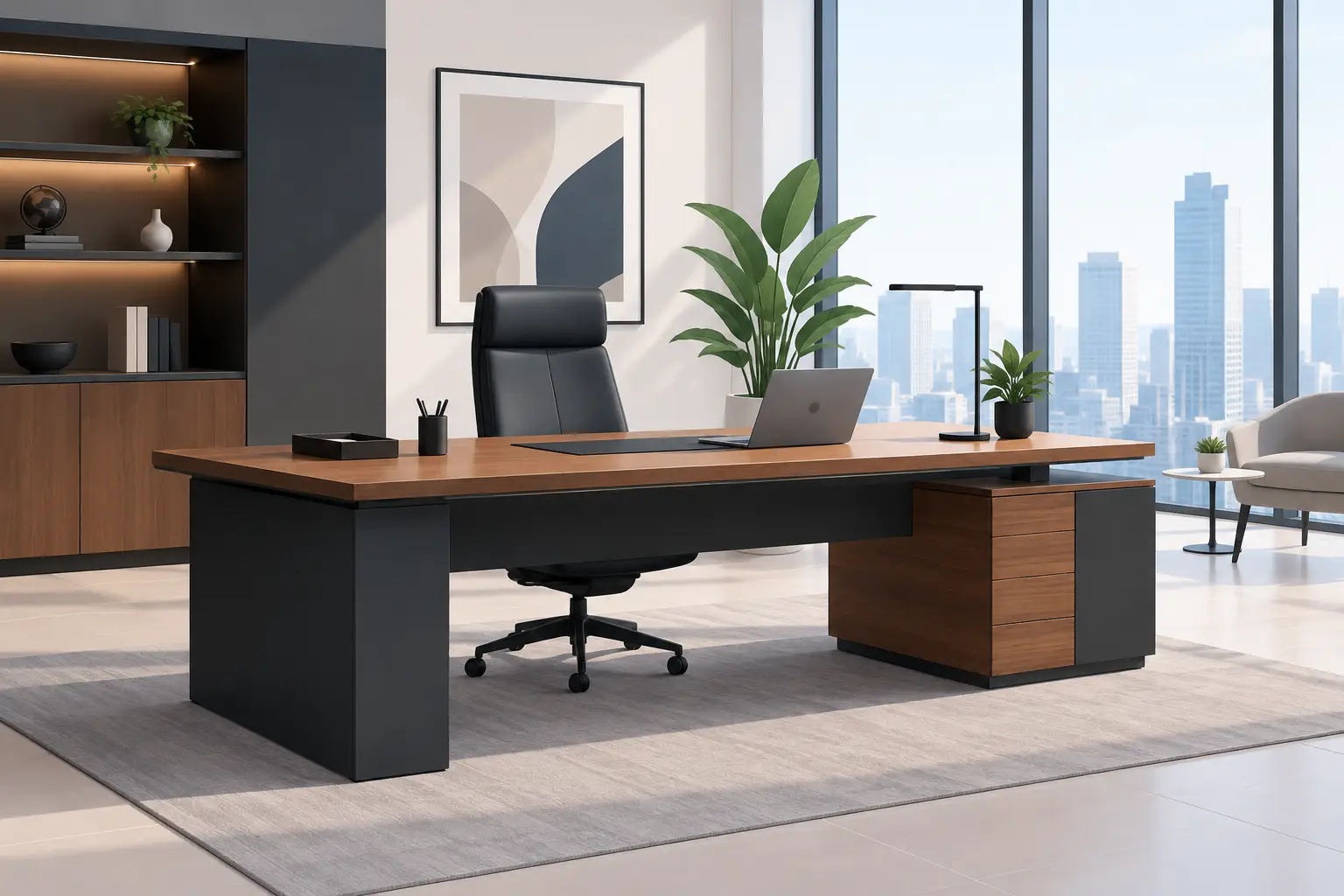
An executive desk is often the most visible working surface in a private office. It frames client conversations, holds the tools behind daily decisions, and signals how seriously a business treats organization. The best executive desk features balance authority and comfort with the practical demands of documents, devices, meetings, and long working hours.
For office managers, business owners, and designers, the decision should go beyond selecting a large desk in a premium finish. A desk that looks impressive but leaves no room for cable management, secure storage, or a visitor chair will create friction every day. The right specification supports the executive while contributing to a more polished and credible workplace.
Start With the Right Desk Configuration
Desk shape determines how an executive moves through the workday. A straight executive desk suits compact offices and clean, formal layouts. It provides a strong visual center while keeping circulation open, especially when paired with mobile storage or a side cabinet.
An L-shaped desk is often the better choice for leaders who divide their time between computer-based work and paperwork. One return can hold monitors and a docking station, leaving the main surface available for signing documents, reviewing plans, or meeting with visitors. This layout creates distinct work zones without requiring a larger private office.
For senior roles with frequent in-office meetings, a U-shaped configuration provides the greatest surface area and storage potential. It can create a complete command center, with the primary desk facing the room and supporting credenzas or returns positioned within easy reach. The trade-off is footprint: a U-shaped desk needs thoughtful space planning so it does not overwhelm the room or restrict movement around visitor seating.
Best Executive Desk Features for Daily Performance
The most effective executive desks are designed around the work that happens on and around them. Size, materials, storage, technology access, and visual proportion all influence whether the desk remains useful after the initial installation.
A work surface sized for real tasks
A generous desktop is not simply a status feature. It gives an executive room to use a laptop or dual monitors while keeping notebooks, files, and a phone accessible. For many offices, a desk width of 63 to 79 inches offers a practical balance between work area and room circulation. Larger dimensions may be appropriate for directors or partners who regularly review physical drawings, contracts, or product samples.
Depth matters just as much. A shallow desk can force screens too close to the user and leave little room for writing. A deeper top supports better monitor placement and creates a comfortable separation between technology and face-to-face conversations. Before specifying dimensions, account for the chair’s movement range, visitor chairs, storage units, and clearance behind the desk.
Durable materials and executive finishes
Commercial-grade construction matters in offices that expect furniture to perform for years, not months. Quality engineered wood with a resilient laminate finish offers reliable resistance to everyday scratches, spills, and cleaning. Veneer and wood-look finishes can bring warmth and visual status, particularly in professional service firms, board-facing offices, and client-focused environments.
The finish should align with the broader workplace palette. Deep walnut, dark oak, and black finishes create a traditional sense of authority. Lighter oak, gray, and matte neutral tones feel more contemporary and work well in offices designed around openness and natural light. High-gloss surfaces can make a strong impression, but they show fingerprints and scratches more readily than textured or matte finishes, including concrete-look surfaces.
Look closely at edge banding, drawer alignment, hardware quality, and panel thickness. These details affect both durability and presentation. A desk with a substantial top and clean joinery communicates premium craftsmanship without relying on unnecessary ornament.
Integrated cable management
Visible cables can undermine even the most refined executive office. Built-in cable grommets, discreet access ports, and under-desk wire channels keep power cords, monitor cables, and charging leads organized. This feature is particularly valuable in offices using dual displays, conference speakers, desk phones, or laptop docking stations.
Cable management also makes maintenance easier. When devices need to be replaced or moved, organized cable routes reduce disruption and help facilities teams avoid the tangle of cords that gathers behind a conventional desk. Specify the location of outlets and floor boxes before choosing a desk, because a well-designed cable port only works when it is positioned for the room’s actual power plan.
Storage that protects workflow
An executive office needs storage close at hand, but it should not turn the desktop into a filing area. Integrated drawers, lockable pedestals, side returns, and credenzas allow documents, personal items, and sensitive materials to remain organized without leaving the work zone.
A pedestal with shallow drawers is useful for stationery, chargers, and daily papers, while a deeper filing drawer supports hanging folders and larger records. Lockable storage is a practical requirement for contracts, personnel documents, financial files, and other confidential material. Soft-close drawer mechanisms add a quieter, more considered experience, especially in private offices used for meetings.
The right storage volume depends on digital habits. A paper-light executive may prefer a clean desk with one mobile pedestal and a low credenza. A legal, finance, or construction professional may require larger locking cabinets and dedicated file storage. Plan for the workflow rather than choosing drawers simply because they are included.
A comfortable working height and clear knee space
Executive desks should support focused work without compromising posture. Standard desk height is generally suitable for most users when matched with an adjustable executive chair. The chair should provide proper lumbar support, adjustable armrests, and a seat height that allows feet to rest comfortably on the floor or a footrest.
Under-desk clearance deserves equal attention. Thick modesty panels, fixed drawer units, and poorly placed returns can limit legroom or prevent the chair from moving freely. This becomes especially noticeable during long meetings or extended computer work. A spacious knee area makes the desk feel more comfortable, functional, and proportionate.
Presentation Features That Build Client Confidence
An executive desk is part of the room’s visual language. Its proportions, finish, and placement should reinforce leadership while making visitors feel welcome. A desk that is too small can appear temporary, while one that is excessively oversized may create an unnecessary barrier between the executive and guests.
A modesty panel gives the desk a complete, professional appearance from the visitor side and keeps cables or personal items out of view. Coordinated side storage, executive seating, and a meeting table or lounge chair can further establish a purposeful office environment. The goal is not to make the room feel formal for its own sake. It is to create a setting where conversations, approvals, and negotiations can happen with confidence.
For client-facing offices, choose finishes that coordinate with reception desks, boardroom tables, and storage cabinets. A consistent material palette makes an office feel planned rather than assembled over time. Desk Craft can help organizations coordinate these pieces across executive offices, workstations, and meeting spaces while retaining a unified professional identity.
Consider Privacy and Adaptability
Private offices do not always need to feel closed off. Privacy panels, modesty panels, and strategic desk orientation can create visual discretion while maintaining an open, contemporary design. If an executive office is positioned near a collaborative area, acoustic considerations may also matter. Upholstered visitor seating, rugs, and soft furnishings can help reduce sound reflection without changing the desk itself.
Adaptability is another valuable feature for growing companies. A modular desk with a reversible return can accommodate a future office move or a changed room layout. Mobile pedestals and freestanding credenzas make reconfiguration easier than fully fixed cabinetry. This flexibility is especially useful for businesses expanding into larger premises or reshaping their management structure.
How to Specify an Executive Desk With Confidence
Before purchasing, measure the room and map the working zone rather than measuring only the wall where the desk will sit. Include chair travel, door swings, window access, visitor seating, and walking clearance. A desk may fit on paper yet make the office feel cramped once its supporting furniture is in place.
Then define what the user needs to do most often. A leader who spends most of the day in video calls may prioritize cable access, monitor depth, and acoustic comfort. A managing partner meeting clients in person may place more value on a broad writing surface, guest-facing presentation, and nearby document storage. A director handling confidential reports will likely need locking drawers and a room layout that protects screen visibility.
The strongest executive office does not rely on one oversized piece of furniture to carry the whole impression. Select a desk that supports the person using it, gives every tool a place, and leaves enough space for the conversations that move the business forward.


