

Blog
Executive Desks That Set the Tone for Leadership

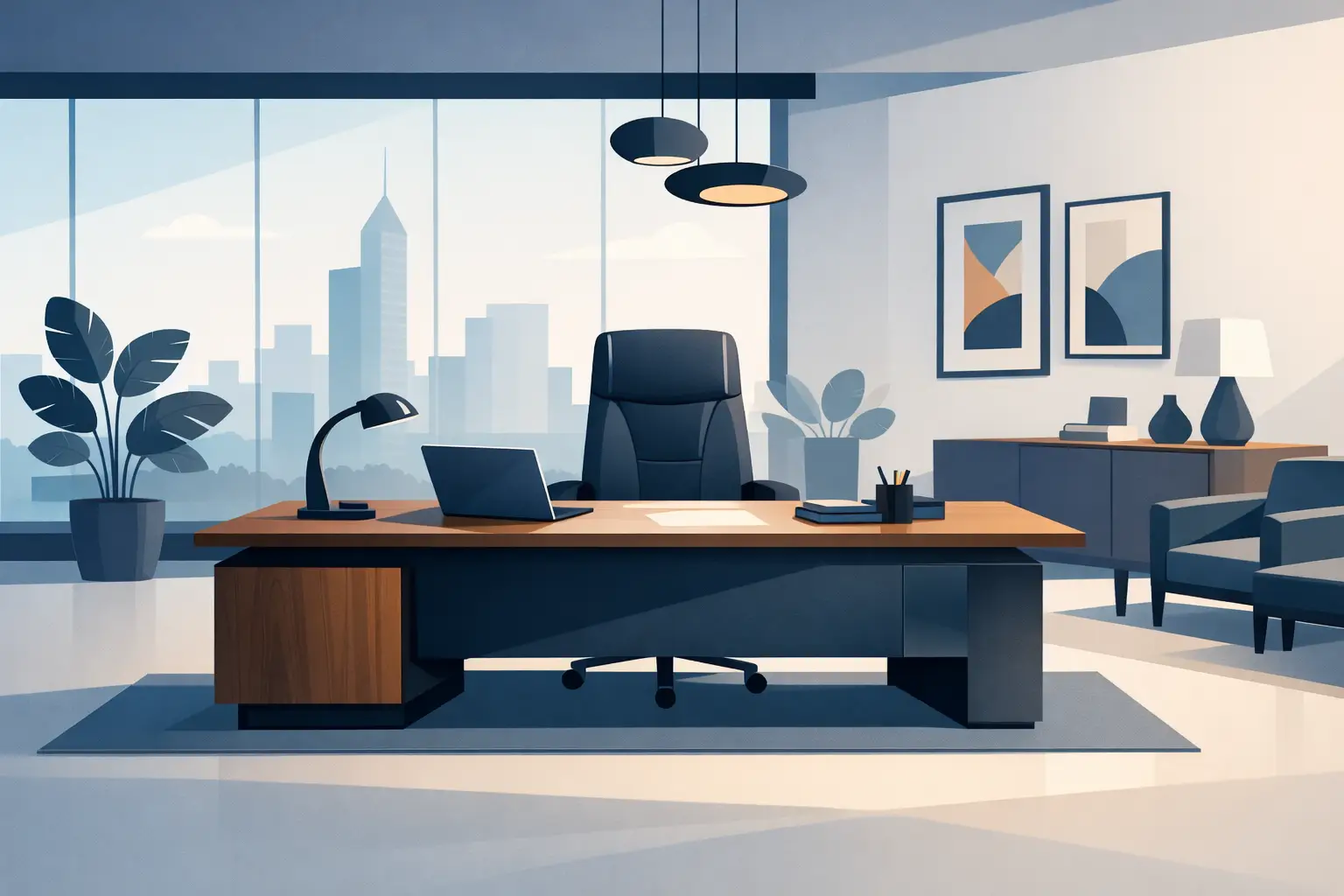
A leadership office is often asked to do more than provide a place to answer emails. It hosts private discussions, strategy sessions, client meetings, and the focused work that cannot happen in an open workstation area. The right executive desks give that space the authority, organization, and comfort those responsibilities require.
For business owners, facilities teams, and designers, the decision is not simply about selecting the largest desk in the room. A well-chosen executive desk needs to support daily workflow while projecting a deliberate, credible image. Its proportions, finish, storage, cable management, and position within the office all influence how effectively the space performs.
What an Executive Desk Should Deliver
An executive desk is a working surface and a visual anchor. It should create a clear sense of leadership without overwhelming the room or making conversation feel distant. Premium wood-look surfaces, refined laminates, metal detailing, and clean-lined modesty panels can establish a polished executive finish while remaining durable enough for demanding commercial use.
Function matters just as much as presentation. Leadership roles frequently involve a laptop or desktop monitor, documents, mobile devices, confidential files, and occasional face-to-face meetings. A desk that looks impressive but leaves no room for active work quickly becomes frustrating. The most successful configurations balance a generous main worktop with practical storage and comfortable visitor space.
There is also a business case for getting the scale right. A desk that is too small can make an executive office feel temporary or under-equipped. One that is oversized for its room can restrict circulation, crowd visitor chairs, and make the office feel formal in the wrong way. The best choice reflects the executive’s workflow, the size of the office, and how often the room is used for meetings.
Choosing the Right Executive Desk Configuration
A straight executive desk works well in compact private offices where the primary need is focused computer work and limited storage. It delivers a clean, contemporary profile and can leave more open floor area for a lounge chair, small meeting table, or guest seating.
For managers who handle paperwork, multiple screens, or frequent calls, an L-shaped configuration offers a more complete work zone. The main desk can support technology and daily tasks, while the return provides a separate surface for reviewing documents, signing paperwork, or placing a printer. This layout is especially useful when the executive needs to shift between concentrated work and quick internal meetings without clearing the entire desk.
A U-shaped executive workstation creates the most substantial footprint. It is well suited to larger offices and senior roles that require extensive storage, multiple devices, or dedicated meeting space near the desk. The trade-off is clear: it provides exceptional surface area, but it needs enough room to preserve easy movement around the workstation. In a modestly sized office, an L-shaped desk with a mobile pedestal may provide the same operational benefits with a lighter visual presence.
Plan for the Work Behind the Desk
Before selecting dimensions, consider what must happen behind the desk every day. A desk used mostly for laptop work has very different requirements from one supporting dual monitors, contract files, a desktop computer, and visiting colleagues.
Allow clear space for the executive chair to move freely and for doors, drawers, and cabinets to open without blocking circulation. If guest chairs sit directly opposite the desk, leave enough legroom and distance for a comfortable, professional conversation. The desk should support authority and comfort, not create an unnecessary barrier between people.
Storage Creates a More Confident Workspace
A polished office loses impact when cables, files, and personal items collect across the work surface. Integrated drawers, side credenzas, filing cabinets, and storage pedestals help maintain the order expected in an executive environment.
For confidential records, lockable drawers are a practical priority. A fixed pedestal can keep essential items immediately within reach, while a mobile pedestal offers flexibility when office layouts change. Vertical filing cabinets use less floor space, whereas lateral cabinets provide broader access and can double as a presentation surface for samples, documents, or display pieces.
A credenza behind the desk is often the strongest choice for offices that need substantial closed storage. It creates a composed backdrop, keeps paperwork out of sight, and gives the executive an easy place to organize materials before or after meetings. Match its finish to the desk for a coordinated furniture series rather than a collection of unrelated pieces.
Cable management deserves the same attention. Grommets, integrated cable ports, and concealed routing help keep power cords from disrupting a premium surface. This detail is easy to overlook during procurement, yet it has an immediate effect on how finished the workspace feels.
Materials and Finishes That Hold Up to Daily Use
Executive furniture must look refined after months of use, not only on installation day. Commercial-grade laminated surfaces are a smart option for high-use offices because they offer consistent color, easy maintenance, and reliable resistance to routine marks. Wood-grain finishes bring warmth and authority, while darker tones can create a more traditional executive presence.
Lighter oak, gray, walnut, and matte neutral finishes often suit contemporary offices that want sophistication without visual heaviness. A black metal base or subtle metallic accents can add definition, particularly in offices with glass partitions, modern task seating, and clean architectural lines.
The best finish depends on the wider workplace palette. A dark desk can make a strong impression in a bright, spacious office, but it may feel too dominant in a compact room with limited daylight. In that case, a medium wood tone or lighter finish can preserve executive character while making the space feel more open.
Durability should guide the final selection. Look for commercial construction, stable bases, quality edge banding, smooth drawer movement, and surfaces designed for frequent cleaning. Furniture is a business investment, and visible wear in a client-facing office can undermine the professional image the desk was meant to establish.
Pair Executive Desks With the Right Seating
The executive chair should complement the desk in both proportion and performance. Leather or leather-look executive chairs communicate leadership and confidence, especially in traditional boardroom-adjacent offices. A high-back chair with supportive cushioning, adjustable height, and tilt control can provide the presence expected of the role while supporting extended work periods.
For a more contemporary leadership office, an ergonomic chair with a breathable mesh backrest may be the better fit. It can reduce visual bulk and encourage better daily comfort, particularly for executives who spend long hours on screen-based work. The desk establishes the room’s authority; the chair determines how well that authority can be sustained through a full workday.
Visitor seating should not be an afterthought. Two well-proportioned chairs opposite the desk create a welcoming setting for quick discussions. If the office hosts longer meetings, consider a small round table or a compact meeting table nearby instead of forcing every conversation across the main desk.
Executive Desks as Part of a Complete Office Plan
An executive office performs best when it connects visually with the rest of the workplace. Reception desks, workstation clusters, meeting tables, storage cabinets, and lounge furniture should share a considered language of finishes, materials, and proportions. This creates a stronger impression for clients and a more organized experience for employees.
For growing businesses, that coordination also supports future expansion. Selecting a furniture range that includes executive desks, team workstations, filing solutions, and boardroom tables makes it easier to add capacity without losing design consistency. Desk Craft approaches office furnishing as a connected system, helping organizations build executive spaces that belong to the larger workplace rather than feeling separately furnished.
A private office should feel prepared before the first meeting begins. Choose an executive desk that gives leadership the room to think, work, organize, and welcome others with confidence – then let the details around it reinforce that same standard.


