Office Storage That Works as Hard as Your Team

A cluttered workstation rarely looks like a furniture problem at first. It looks like delayed approvals, misplaced contracts, crowded desktops, and staff who spend too much time looking for routine items. The right office storage brings order to those small daily pressures while helping the workplace project control, credibility, and professional intent.
For businesses in Dubai and across the UAE, storage should not be an afterthought added once the desks are in place. It is part of the operating system of the office. From a compact startup floor to a multi-department corporate headquarters, cabinets, pedestals, and filing units determine how easily people can focus, collaborate, and protect the information that matters.
Office Storage Starts With Workflow, Not Empty Wall Space
The first question is not how many cabinets an office can fit. It is what needs to be stored, who needs access, and how often those items move. A finance team handling active records needs a different solution from a sales team storing samples, or an executive office protecting confidential documents.
Start by separating items into three practical groups: daily-use materials, reference files, and archive records. Daily-use materials should sit within easy reach of the workstation. Reference files can move into shared cabinets near the team zone. Archive records may be placed in higher-capacity vertical filing cabinets or dedicated back-office storage where they remain secure without consuming premium workspace.
This approach prevents a common mistake: installing large storage cabinets simply because there is an available wall. Oversized units can make a compact office feel heavy and restrict circulation. Too little storage, however, pushes documents and personal belongings onto desks, reception counters, and meeting tables. The right balance depends on team size, paper volume, confidentiality requirements, and the way each department actually works.
Choose the Right Office Storage Format
A coordinated storage plan usually combines more than one format. Each piece should have a clear role within the layout rather than becoming a general catch-all.
Mobile Pedestals for Individual Workstations
Mobile pedestals are a strong choice for employees who need immediate access to files, stationery, chargers, personal items, or small equipment. Positioned beneath or beside a desk, they preserve a clean desktop while keeping essential materials close at hand. Lockable drawers add a useful level of privacy in shared workstation environments.
For clustered workstations, mobile storage has another advantage: flexibility. Teams can reposition units as seating plans change, new staff join, or departments reorganize. This is particularly valuable for growing companies that want a professional setup without locking themselves into a rigid floor plan.
The trade-off is capacity. A pedestal is ideal for active files, not a department’s long-term paper archive. Specify it as personal and task-based storage, then support it with shared cabinets nearby.
Vertical Filing Cabinets for High-Volume Records
Vertical filing cabinets use floor area efficiently, making them well suited to offices with substantial document retention requirements. Legal firms, consultants, finance teams, HR departments, and administrative operations often benefit from dedicated filing capacity that keeps records categorized and accessible.
Look for smooth drawer operation, durable construction, reliable locking mechanisms, and drawer sizes that match the file system already in use. A cabinet that does not accommodate existing folders creates friction from day one. Consider drawer weight as well. Fully loaded filing drawers place significant demands on hardware, so commercial-grade construction matters more than a decorative finish alone.
Vertical units make the best use of a narrow footprint, but wide lateral cabinets may be the better choice when frequent file access and top-surface workspace are priorities. A lateral cabinet can also function as a practical support surface for printers, scanners, display materials, or office greenery.
Storage Cabinets for Shared Supplies and Equipment
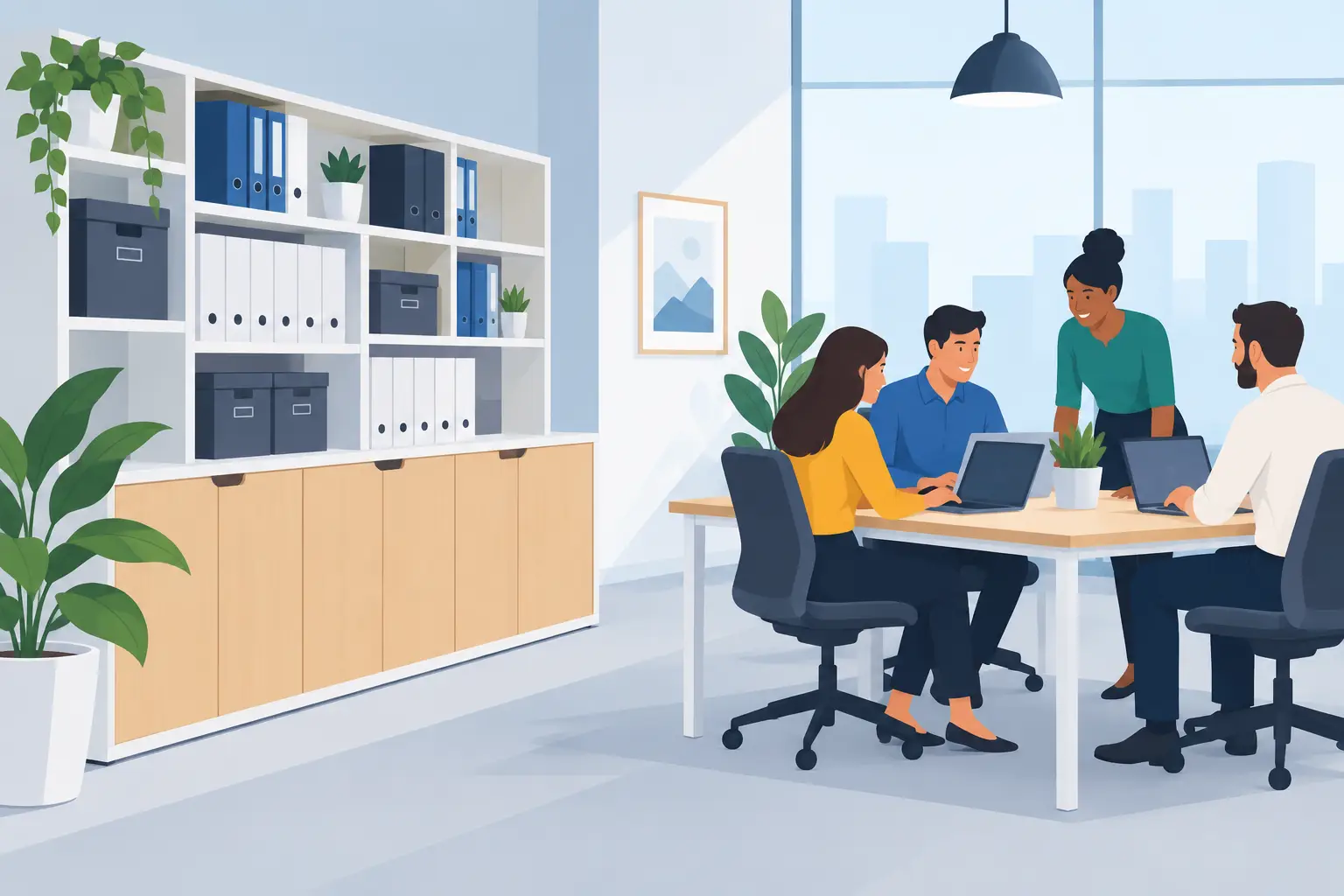
Shared storage cabinets keep communal items out of individual work zones. They are useful for stationery, printer consumables, presentation equipment, pantry supplies, product literature, IT accessories, and meeting-room materials. When placed strategically, they reduce repeated trips across the office without creating visual noise.
Closed-door cabinets are generally the stronger choice in client-facing and executive environments. They conceal visual clutter and maintain the clean lines associated with premium office design. Open shelving can work well for carefully arranged books, awards, branded materials, or display objects, but it requires disciplined upkeep. If the contents are likely to become mixed or overfilled, doors are the more polished option.
Cabinet finishes should relate to desks, boardroom tables, and reception furniture. Matching wood tones, metal details, or neutral colors helps the office feel planned rather than assembled piece by piece.
Executive Storage for Authority and Privacy
An executive office needs storage that supports discretion as well as visual status. Credenzas, side cabinets, and integrated desk storage can hold confidential files, personal devices, meeting materials, and daily paperwork without overwhelming the room.
The most successful executive setups keep the desk surface intentional. A clear worktop gives space for conversation, decision-making, and client meetings, while nearby storage handles the practical volume behind the scenes. Premium finishes, controlled proportions, and secure drawers reinforce the authority and comfort expected in a leadership space.
Plan Storage Around Movement and Access
Storage placement affects more than appearance. A cabinet door opening into a main walkway, or a filing drawer blocking a colleague’s chair, can make an otherwise attractive office feel poorly planned. Allow enough clearance for drawers, doors, and people moving through the space, especially around shared workstations and printer areas.
Consider access levels as well. Sensitive personnel records, client files, financial information, and contracts should be stored in lockable units with access limited to appropriate team members. General supplies do not need the same security, so placing them in easy-to-reach shared cabinets improves convenience.
Meeting rooms need their own storage logic. A low cabinet can house presentation cables, adapters, stationery, video-conferencing accessories, and refreshments while keeping the boardroom table clear. Reception areas may need concealed storage for visitor materials, courier items, forms, and staff essentials. These zones are often visible to clients, so a clean storage solution supports a strong first impression.
Design for Digital Work Without Ignoring Physical Needs
Many offices use less paper than they did a decade ago, but paperless does not mean storage-free. Laptops, docking stations, headsets, cables, samples, devices, personal belongings, and cleaning supplies all need a home. The best office storage strategy recognizes that modern workplaces manage a mix of physical and digital tools.
Before ordering furniture, audit what is currently sitting on desks or hidden in temporary boxes. That inventory reveals the real requirement. If staff keep bags under desks because there are no lockers or personal drawers, adding more filing cabinets will not solve the issue. If a printer area is permanently crowded with supplies, a nearby cabinet with dedicated compartments may remove the bottleneck immediately.
Desk Craft approaches storage as part of a complete workplace furnishing plan, coordinating filing cabinets and mobile pedestals with executive desks, team workstations, reception counters, and meeting furniture. This creates visual consistency while giving every area a clear operational purpose.
Materials, Finishes, and Durability Matter
Office storage is opened, closed, moved, loaded, and cleaned repeatedly. Commercial-grade materials and dependable hardware protect the investment over time. Metal filing cabinets offer a practical, resilient option for intensive record storage. Engineered wood cabinets with quality finishes can bring warmth and executive presence to client-facing settings. The best choice depends on the workload, desired aesthetic, and location within the office.
Do not select storage solely by external dimensions. Check internal drawer depth, shelf adjustability, lock configuration, load capacity, and whether the cabinet can accommodate the tools your team uses. A sleek unit that cannot store standard binders, files, or equipment efficiently will create frustration despite its appearance.
Color also plays a functional role. Light finishes can keep compact offices open and contemporary, while darker executive finishes communicate permanence and authority. In open-plan environments, coordinated storage can visually organize departments without relying on excessive partitions or privacy panels.
Make Room for Growth Before You Need It
An office that is full on move-in day has little resilience. Teams grow, departments change, and storage requirements shift after new systems, staff, or services are introduced. Leave room for an additional pedestal, filing cabinet, or shared storage unit where possible.
Modular and mobile pieces are especially practical for businesses expanding in stages. They allow the workplace to evolve without replacing every furniture item or compromising the professional look established at launch. A measured investment in adaptable office storage protects both productivity and presentation as the organization moves forward.
A well-organized office does more than hide paperwork. It gives employees a clearer workday, gives leaders better control of essential records, and gives every visitor confidence that the business behind the furniture is prepared to perform.